Newsletter Fall 2019
Dear friends,
The cooler autumn days are slowly beginning where you are. And so, it's time again for our autumn report from warm, tropical Africa. The local summer is just beginning with tolerable temperatures around 30 degrees Celsius - but with high humidity.
As usual, we would like to start this time with an update on our children.
Our Children
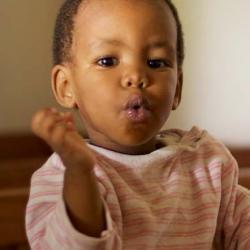
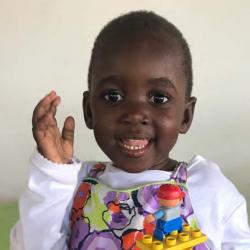
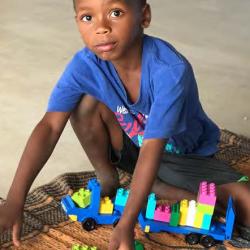
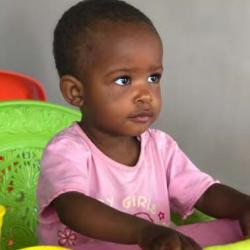
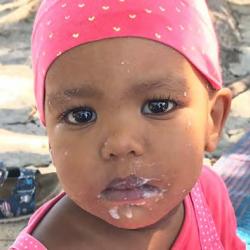
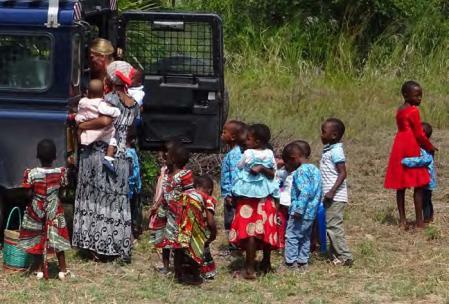
Currently, 20 children are under our care. This means we have reached the maximum capacity of our first building, the children's facility for our toddlers.
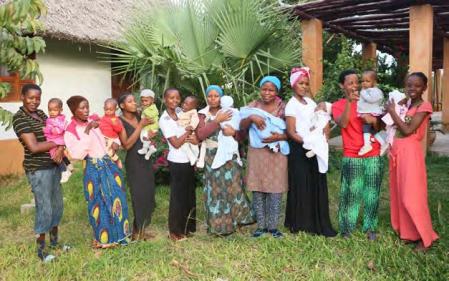
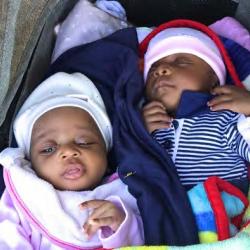
On May 29th, we welcomed three babies aged 2 to 3 months on a single day. All three children (two girls and one boy) are foundlings. On July 10th, another boy arrived, abandoned by his father outside a shop. No one knows where the mother is, and although the father is known, he doesn't care for his son and has often left him alone. Apparently, he is overwhelmed with caring for his son. Two days later, a three-month-old girl arrived, who was practically living on the street. She was not in good health. At the same time, we were able to return a child we had only temporarily taken in to her mother.
The total of seven babies keeps us busy day and night. We had to hire additional care staff, which is always associated with great challenges. We generally give our new staff a probationary period, because not everyone is up to the challenges. Sometimes, the financial interest in the work is stronger than the interest in the children. Furthermore, they must integrate well into the existing team of caregivers. We have not made it easy for ourselves to select the best "mamas" so far.
The story of our premature baby, little Laura*, who was born weighing barely 1,500 grams, has had a happy ending after she was initially hospitalized twice. She looked like a "Biafra child," consisting only of skin and bones. From the third month, she began to put on weight properly. Today, after seven months, she weighs five and a half kilograms and seems rather chubby. She continues to receive her goat milk powder, which friends from Germany brought us (goat milk is closest in composition to breast milk).
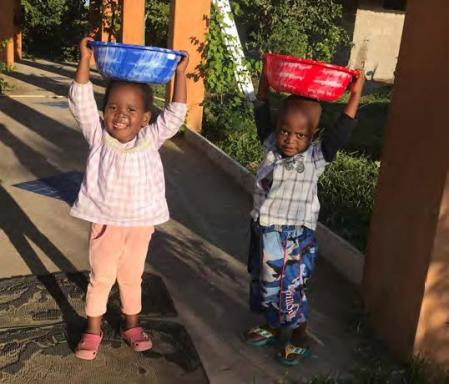
Laura now also tolerates banana milk, carrot juice, and various types of acid-free fruit puree. Although she is still relatively small for her age, she appears very cheerful, alert, and extremely content. For comparison, the daughter of one of our employees weighs over six kilograms at two months old.
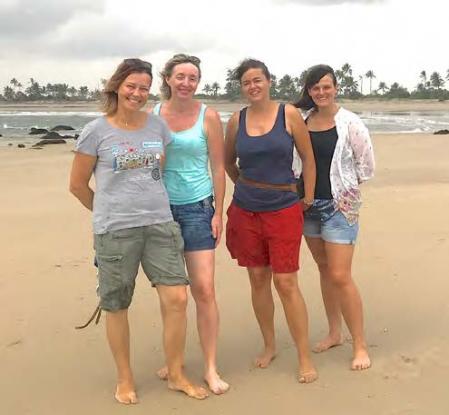
One could call it a small miracle. Personally, I was somewhat skeptical about the matter at first. Four physiotherapists from Poland, specializing in the treatment of children with disabilities, wanted to come to us for three weeks. But how many meaningful tasks could four highly qualified physiotherapists specializing in children with disabilities undertake for us in three weeks, I wondered. We do care for one child whose overall development is very difficult due to intense alcohol abuse by the parents – but would four physiotherapists really be fully occupied with that?
In hindsight, however, the stay of our four visitors proved to be a great blessing. Through intensive daily engagement with each of our children, we gained insight into their various developmental stages, regarding talents and abilities, but also their developmental deficits. Each child was assessed based on professional aptitude tests during daily play together. Now we can adjust to them individually and promote them more strongly in certain areas. Furthermore, our “mamas” learned during the three weeks together how to play "intelligently" with the children to specifically foster their motor skills.
However, the actual "small miracle" for us lies in the generous offer our Polish friends made to us. Sascha*, whose development is severely impaired, is now to be treated free of charge for approximately two to three months at the Polish specialized clinic "Center for Education and Rehabilitation" (OERW USTROŃ - Ośrodek
Edukacyjno-Rehabilitacyjno), where our four visitors also work. If this treatment were not to happen, there would be a risk that Sascha would not learn to walk in the long term and his language development would also lag. The costs for this extensive treatment will be covered by our Polish friends and sponsors from Nuremberg.
The "Ośrodek Edukacyjno-Rehabilitacyjn" is a clinic where approximately 70 children receive inpatient treatment and over 400 children with disabilities are treated weekly on an outpatient basis. The clinic is a private project founded a few years ago by one of our visitors with the support of generous donations.
We are now facing the challenge of applying for all necessary travel documents for Sascha, starting with his birth certificate, passport, and entry visa to Poland. We are working closely with the youth welfare office and the relevant authorities on this, because you can't "just take" a child to Poland.
To help Sascha cope with the unfamiliar environment in Poland, one of our "mamas" with good English skills will be with him throughout his stay in Poland. She also requires relevant travel documents. Apart from caring for Sascha, she will learn how to deal with children with special needs during her time at the clinic in Poland.
Construction Update
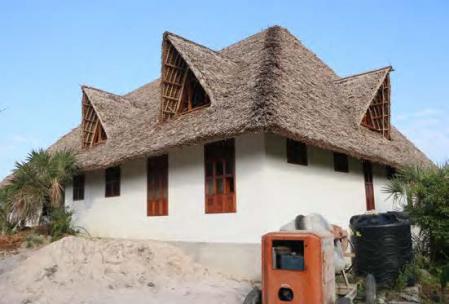
Since summer 2018, an exceptionally large number of construction projects have been tackled simultaneously. In the meantime, "we're seeing some light at the end of the tunnel" and are pleased with the progress.
The third orphanage building is almost completed, except for a few details. We will move the first older children into the third building before the end of the year. This will create space for more toddlers and babies in the first orphanage building.
The school (and church/community center), like the third orphanage, is in the final stages of construction. Electricity and water lines have been laid and only need to be connected. Next, the floor screed will be poured, and the septic tank must be completed. Instruction for a preschool class will begin in the coming year.
Two additional staff apartments are almost finished, except for some interior details.
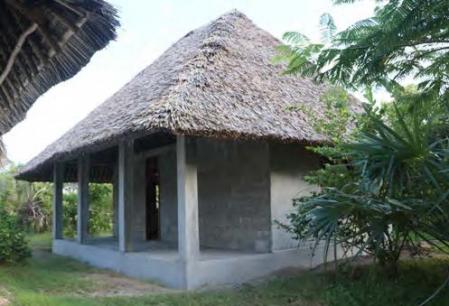
Electricity and water are now sufficiently available throughout the entire site. We are completely self-sufficient and do not require generators or a public power connection. We exclusively use solar power with enough capacity for all refrigerators and freezers, washing machines, water pumps, lighting, computers, as well as kitchen appliances and tools. The rainy season can be bridged by sufficiently dimensioned solar batteries. Each building has a water connection with at least one bar of pressure, and there are a total of six connections on the site for garden and park irrigation. Sufficient electricity and water are a great blessing in Africa.
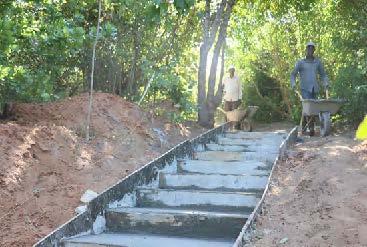
We concreted an outdoor staircase and a path with a small bridge so that the children can move around the premises dry-footed during the rainy season. During the rainy season, the path was flooded for almost three months and therefore impassable.
Special Challenges
The last few months since summer 2018 have been a great challenge for us. Thanks to helpful individual donations, we were able to advance important construction projects. These projects must now be completed by the end of the year.
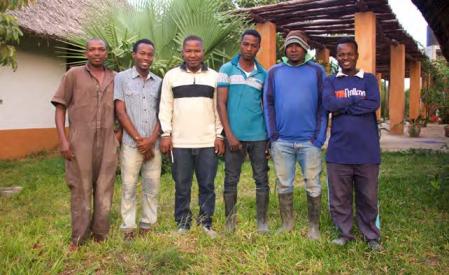
In addition, we had to hire additional staff for the care of our children, which involves further financial outlay. Currently, 23 employees are employed – almost half of them as "mamas," but also several construction workers. The number of employed caregivers is stipulated by the ministry.
At the latest, next year we will need a kitchen and cafeteria, as the current small kitchen was only intended for the first orphanage building and the feeding of toddlers.
A playground for the school and orphanage, made of round timber, hemp ropes, and car tires, is to be built by the turn of the year. This has been a requirement by the authorities for our license for some time. A construction team from Nuremberg has volunteered to support us at the turn of the year with the construction of the playground or the shell of the cafeteria. (If interested in participating in the construction team, further information can be obtained at: info@dunia-ya-heri.org).
For all of this, we rely on your support and help.
As of 2019, due to the immense construction and manual effort increasing with each existing building, we would like to ask a friendly couple from Austria (the ideal combination of mechanical engineer and nurse) to support us on-site as employees in the medium term. We are not yet sure how we can finance the staff costs (flights, residence permit, health insurance, and a small salary).
To this day, thank God, we have been able to pay our salaries regularly at the end of the month. This is not to be taken for granted. We trust that we will continue to succeed. We can only offer our orphans and foundlings a loving, blessed home and a carefree future with your donation.
Therefore, we would like to extend our heartfelt thanks to everyone who supports Dunia ya Heri – whether individuals, organizations, or companies. We continue to believe in one miracle or another.
With kind regards and blessings
Yours

Thomas Küsel
Vice Chair
Dunia ya Heri
Yours

Judith Klier
Chair
Dunia ya Heri
* name has been changed
Donations
To help as many children as possible, we rely on donations. Thank you for your help.