
The Project
»The realization of a vision requires a healthy mix of realism and dreaming.«
Alexander Beeb
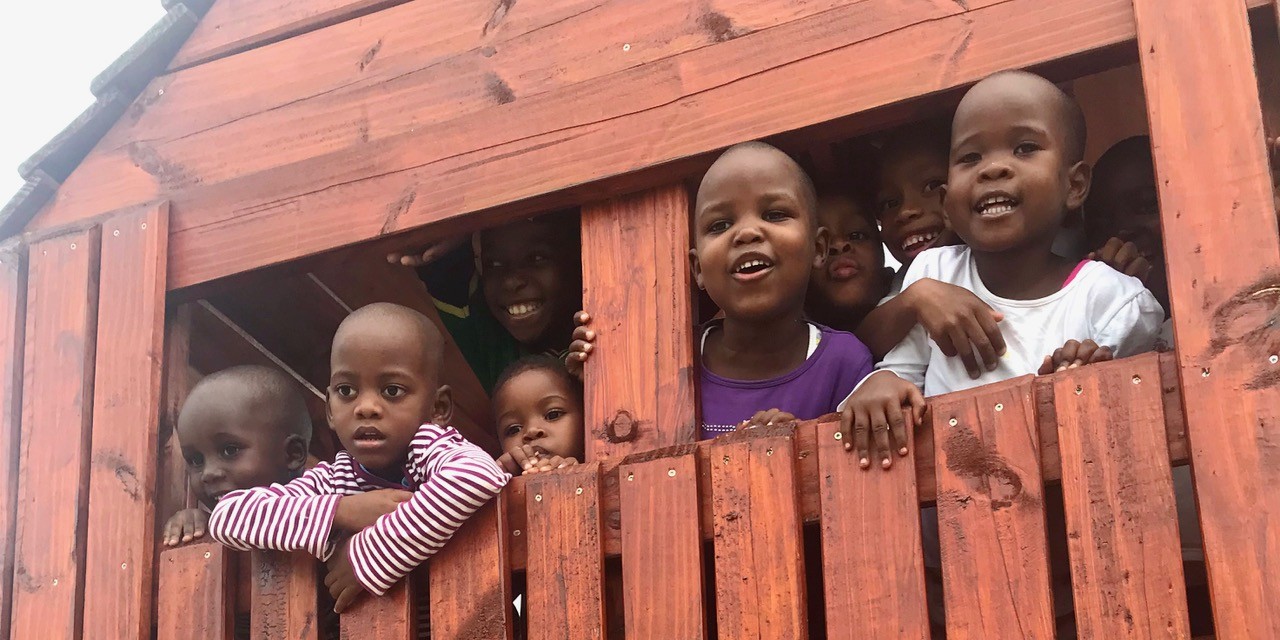
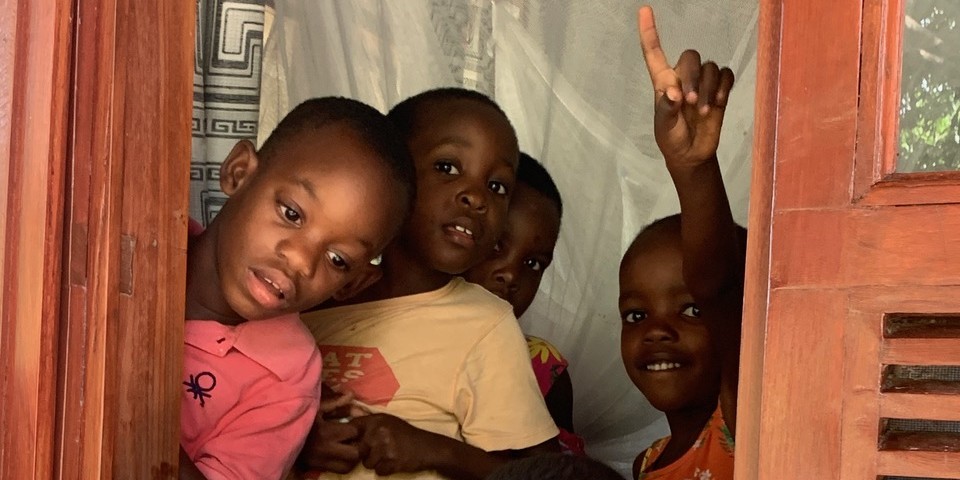
What began in 2015 as little more than a dream has now become a reality! It's hard to believe that on a once-fallow piece of land, an orphanage for over 40 children aged 1 to 13, as well as a primary school for more than 140 students – including 19 orphans – could be built within just ten years (as of 2025).
Our project is named “Dunia ya Heri”, which means “Earth of Blessings” in German. This name perfectly encapsulates the philosophy of our institution: a place that becomes a blessing for many children.*
An overview of some essential principles and background information on Dunia ya Heri:
Our Children
»Children are the living messages we send to a time we will not see.«
John W. Whitehead
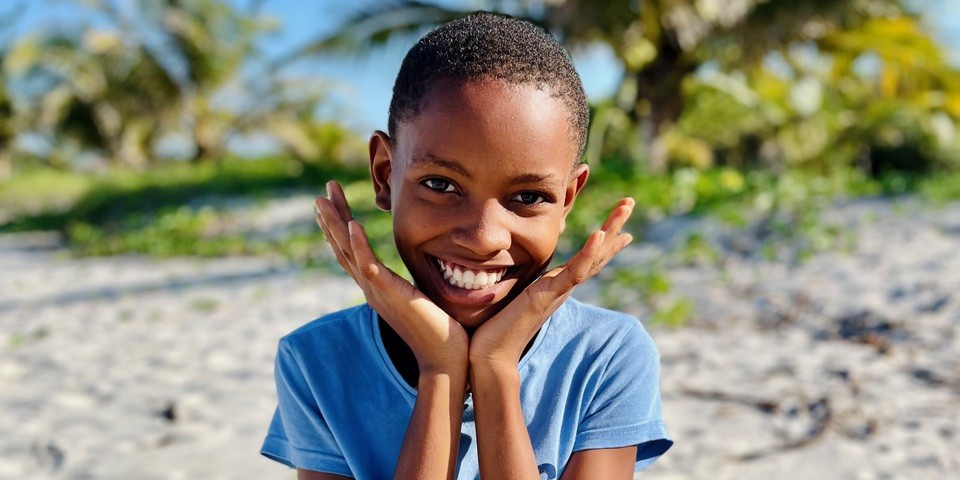
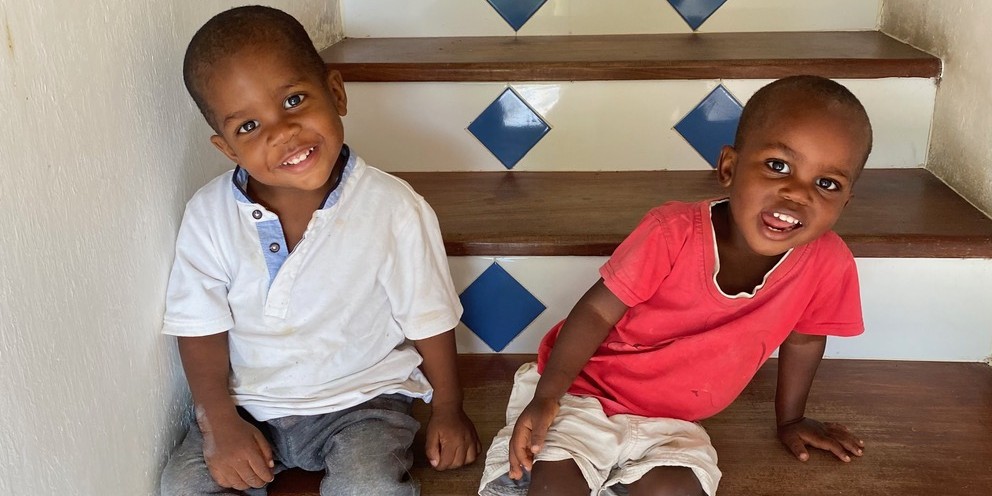
It would take several novels to tell all that we have experienced together with the children. There's the premature baby who was born after only seven months – her mother did not survive the birth. There are children abandoned by their mothers – perhaps because a new partner did not accept children from a previous relationship. There are children found on the beach, in a bar, on the street, in a dilapidated house, or siblings left with a neighbor. And there are even more tragic fates – about which we deliberately wish to remain silent out of consideration for our protégés.
We receive our children exclusively through the Social Welfare Department of Dar es Salaam – always with a police report, a medical certificate, and an official letter granting us guardianship. The children are usually very young – up to three years old when they arrive. As one of the few orphanages in Dar es Salaam, we take in newborns and infants – which, of course, involves a particularly high level of care.
Some of the children – usually around one year old – are adopted. We have no veto or say in the selection of adoptive families.
Our Approach to Upbringing
»Education is example and love, nothing else.«
Friedrich Wilhelm August Fröbel
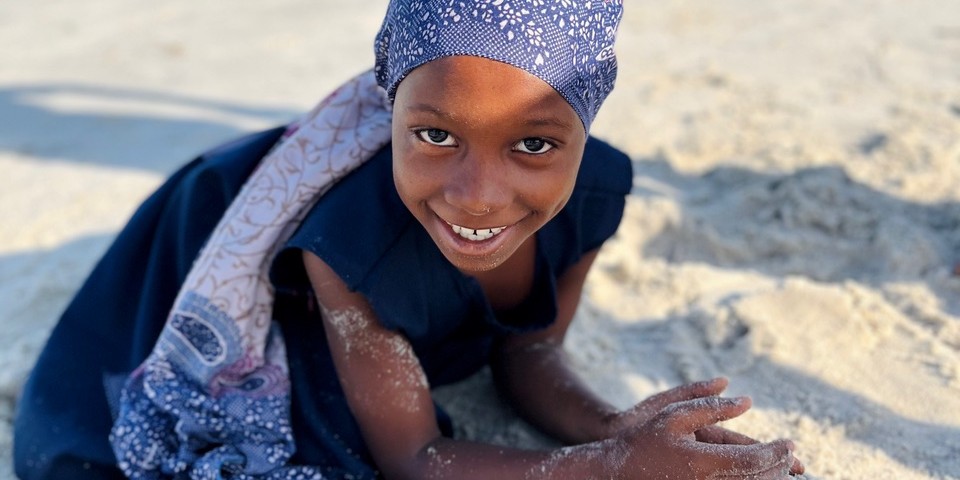
The foundation of the Christian faith is the principle of love: “Love God, your Lord, and your neighbor as yourself.” From this understanding, love, security, and self-determination are at the heart of our children's upbringing – as are values such as honesty, responsibility, and integrity. Our goal is to help the children develop a stable and balanced character so that their behavior can set an example for others.
Dunia ya Heri is deeply rooted in Tanzanian culture. We place great importance on preserving local traditions and ways of life. At the same time, we provide our children with international educational standards to pave the way into professional life and promote social integration. We accompany each child until the completion of their vocational training – with the aim of enabling them to lead a self-determined life, taking responsibility for themselves and others.
Our Educators
»The beginning of all education is: having time for the child.«
Karl Hesselbach
Children hold a special place with God – he himself invites them: “Let the little children come to me and do not hinder them, for to such belongs the kingdom of God.” From this perspective, we too want to consciously dedicate our time, strength, and attention entirely to the children.
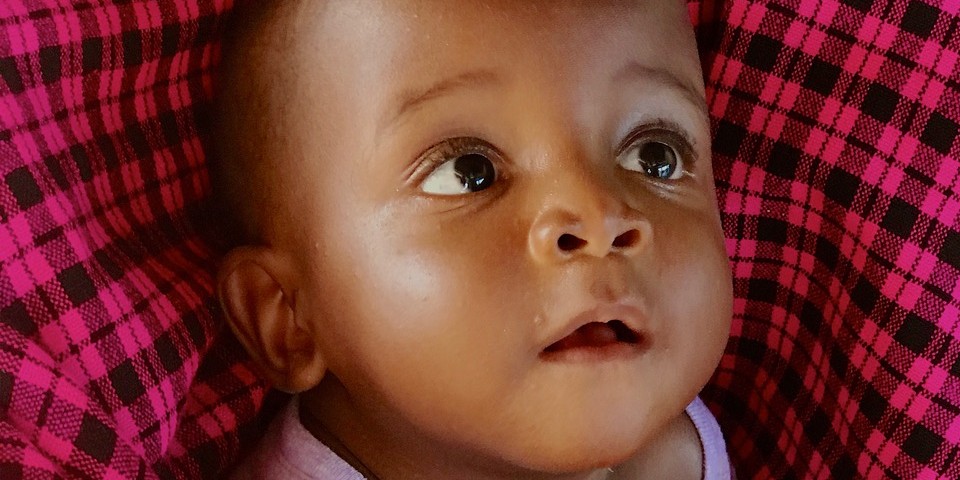
On average, one educator – lovingly called Shangazi by us (Swahili for “children's aunt”) – cares for about five children. The Shangazis maintain a loving, caring, yet consistent parenting style that creates an atmosphere of trust and security.
In addition to personal and social development, we place great importance on individually fostering talents and practical skills. This includes early musical education, English lessons, handicraft activities, sewing, as well as household and gardening tasks. Many of these offerings are supported by dedicated volunteers – especially young people who are completing a Voluntary Social Year in Tanzania and dedicating their time, skills, and heart to the service of the children.
Our Team
»None of us is as smart as all of us.«
Ken Blanchard
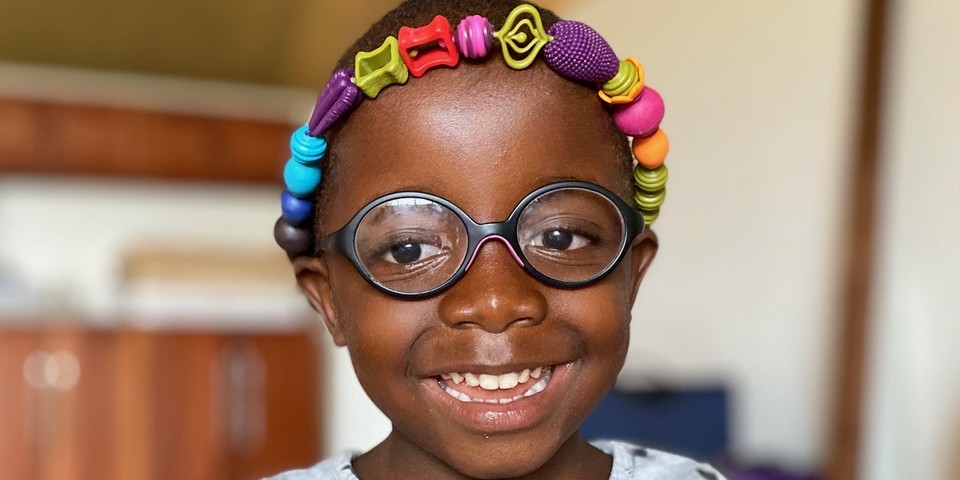
Our team consists of a small group of dedicated volunteers who use their personal, professional, and financial resources, their time, and their skills to help alleviate the hardship, hunger, and lack of prospects for the poorest and most helpless in this world. Some have even moved to Africa to live and work there with the children and local staff.
Many organizations campaign to help children in the Third World. Through our personal commitment, we can guarantee our supporters complete transparency regarding all our activities. We would be delighted if you would participate in the development and progress of our project – so that the story of our "Dunia ya Heri" also becomes your very personal experience and blessing.
The Location
»Where one does well, there is his fatherland.«
Aristophanes
Among the many countries dependent on humanitarian aid, we consciously chose Tanzania. Although the country has been politically stable for over 40 years, there is still a great need for support. The HIV infection rate is estimated at about 8 percent, resulting in approximately 100,000 children growing up as AIDS orphans. These children, in particular, can be specifically helped through private initiatives.
We decided to realize our project in a quiet, rural environment – far from the hustle and bustle of the city, so that the children can grow up in a protected and natural environment. Nevertheless, our location is only about 50 kilometers from Dar es Salaam – a metropolis with over five million inhabitants. Precisely because of the size of this city, there is a significant need for social support there.
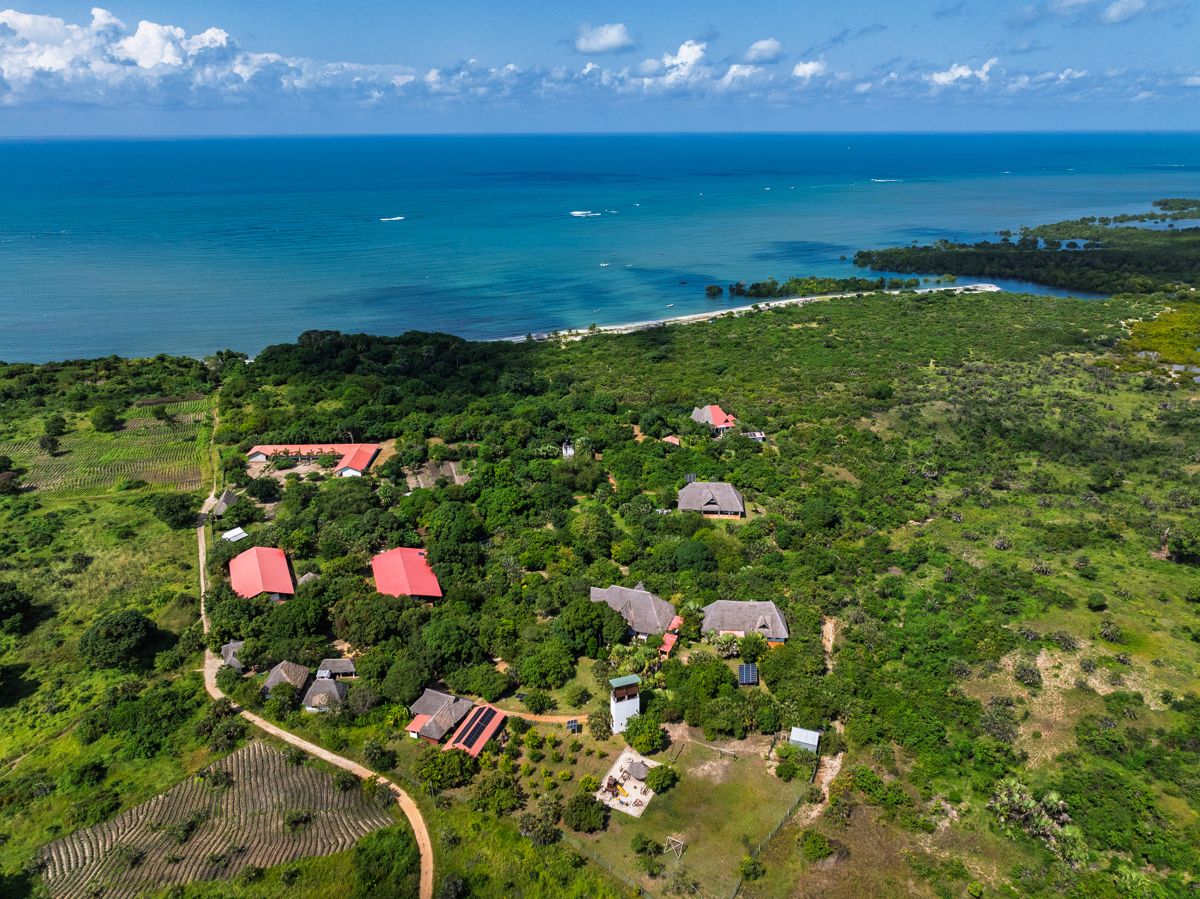
- 1: Aerial Footage
- 2: Beach Hut
- 3: Vegetable Garden
- 4: School
- 5: Boys' Home
- 6: Pond
- 7: Home for Toddlers
- 8: Dining Hall
- 9: Girls' Home
- 10: Preschool & Chapel
- 11: Pizza Oven
- 12: Grounds & Paths
- 13: Driveway
- 14: Solar System
- 15: Garage & Storeroom
- 16: Staff Housing
- 17: Water Towers
- 18: Henhouse
- 19: Workshop
- 20: Playground & Soccer Field
Our Size
»The destiny of a human being has enough room for greatness even in a small place.«
Werner Bergengruen
To preserve a distinctly familial atmosphere, remain true to our educational philosophy, and be able to give each child sufficient individual attention, we have consciously decided not to admit more than 50 to 60 children.
Independence
»It is easy to live in society by the rules of others. It is equally easy to live secluded according to one's own ideas. But greatness is attested by whoever preserves the independence of the solitary amidst the crowd with kindness.«
Ralph Waldo Emerson
Current geopolitical and global economic developments highlight the importance of economic independence. Our goal is therefore to make the orphanage largely self-sufficient in terms of food, water, and energy.
Thanks to the geographical location near the equator, no heating is required. The year-round strong solar radiation provides ideal conditions for the use of photovoltaic systems for electricity generation. The water supply for daily use is provided by our own wells, while septic tanks with microbiological treatment offer a sustainable solution for wastewater.
While we are not yet entirely able to do without regular food purchases, our farm already supplies a large part of the necessary food. Among other things, we grow corn, sweet potatoes, rice, bell peppers, onions, tomatoes, pumpkins, and cucumbers – and have planted tropical fruits such as mangoes, papayas, bananas, pineapples, and passion fruits.
We also keep five cows, free-range chickens, and goats. Goat's milk in particular is of great importance to us, as it is the best substitute for breast milk for our youngest children.
Our Origin Story
»Dimidium est facti coepisse - Half the task is to have begun.«
Decimus Magnus Ausonius
What was recently little more than a dream has now become a reality!
The Orphanage
In 2014, during our intensive search for the ideal location for “Dunia ya Heri” – our “Earth of Blessings” – our gaze increasingly fell on a piece of land near Dar es Salaam, the “House of Peace.” Dar es Salaam is the largest city in Tanzania. To the south, it is bordered by a strait that can be crossed either by ferry or via a newly built bridge.
On the other side of the strait, having barely escaped the hustle and bustle of the big city with its colonial buildings, concrete blocks, churches, and mosques, a rural idyll with a village character and wooded surroundings unfolds. The busy city life one just left behind suddenly seems far away.
The further one drives along the coast of the Indian Ocean southwards, the sparser the settlement becomes. Lush greenery, wide meadows, and majestic tropical trees line the road.After about 50 kilometers, you reach the village of “Yale Yale Puna.” Shortly after the village, a small path – about 400 meters – leads to a paradisiacally beautiful piece of land of about 11 hectares. This includes old trees with coconut palms, mango trees, cashew, and baobab trees. With a little luck, you might also encounter wild animals such as vervet monkeys, baboons, or antelopes. This property became our “Earth of Blessings.”
The terrain is slightly hilly and therefore varied. The soil is fertile and excellently suited for growing fruits and vegetables. In the nearby village, there is a small clinic for basic medical care. The beach of the Indian Ocean is only a few minutes' walk away.
To date (2025), a small children's village has been built on the site, consisting of the following buildings:
- 2015: A staff building with two apartments and a shed
- 2016: A dormitory for 20 babies and toddlers
- 2017: A dormitory for 12 primary school girls with two staff apartments
- 2018: Another staff building with two staff apartments
- 2019: A chapel building, which can also be used as a school
- 2020: A dormitory for 12 primary school boys with two staff apartments
- 2021: A primary school with initially 4 classrooms
- 2022: A workshop
- 2023-2024: A cafeteria with a kitchen
In addition, other important infrastructures have been created on the site: A large playground offers children space for movement and joy. Two 10-meter-high water towers, each with its own wells and solar pumps, supply the children's village with a total of 40,000 liters of water. In addition, four solar fields have been installed, whose storage capacity enables a largely independent power supply. Alternatively, it is now also possible to connect the property to the public power grid.
In 2024, a fish pond was also built, which will simultaneously serve as a fire-fighting water reservoir in case of fire.
The School
We soon realized that we would need our own primary school. In government schools, class sizes were around 80 to 100 children per teacher – conditions that could not meet our educational standards or individual support needs. Furthermore, the influence of outside children could have jeopardized our educational concept. Another important aspect was the provision of solid English language skills.
For these reasons, we founded the private “Jezreel Pre- and Primary School” – an English Medium School, where all instruction takes place exclusively in English. In 2021, we started with the first two school classes in the chapel building on our premises.
Thanks to the support of our American partner organization “Restore a Child”, an adjacent plot of land was acquired to expand the school. In the same year, we began the construction of four classrooms, to which all lessons were moved in 2023. In 2024 and 2025, four more classrooms followed, and a preschool was established in the chapel building in parallel.
In addition to the children from our orphanage, children from the neighboring village also have the opportunity to attend our school. School fees are deliberately kept low because the purchasing power in the countryside is not comparable to that in Dar es Salaam. Class size is limited to a maximum of 25 children – a central component of our quality standard. Our school enjoys a good reputation. It generates a small surplus that directly benefits the maintenance of the orphanage.
The Farm
Shortly after acquiring our main property in 2015, we recognized the importance of acquiring additional land for agricultural purposes and as a training ground for our children. The Austrian company Optimo – specializing in the production and distribution of mattresses and slatted frames – agreed to finance the purchase of approximately 10 hectares of land near the orphanage.
Since then, the farm has been continuously developed. An irrigation system with a solar pump, fed by two wells with a total capacity of about 100,000 liters of water storage, was created. An underground cellar was built for storing the harvest, and a residential building with five staff apartments was constructed for the personnel.
As mentioned, various agricultural products are grown on the farm, including corn, sweet potatoes, rice, bell peppers, onions, tomatoes, pumpkins, cucumbers, as well as tropical fruits such as mangoes, papayas, bananas, pineapples, and passion fruits. Our goats and cows are also housed on the farm.
Despite all the progress, an economic break-even point has not yet been reached, as agricultural yields are not yet sufficient to fully cover personnel costs. However, we are confident that this could fundamentally change with the planned commissioning of our own agricultural school.
Our Future
»The human heart plans its way, but the Lord directs its steps.«
King Solomon (Proverbs 16:9)
We are grateful that Dunia ya Heri could largely be realized through private donations. We also received support from organizations such as BILD hilft e.V. “Ein Herz für Kinder,” Restore a Child, Outpost Centers International, and the mattress company Optimo. Nevertheless, implementation was often not easy. Especially in the beginning, it was uncertain whether we would truly be able to achieve the set goals.
The Bible emphasizes that caring for widows and orphans is a central part of social order and personal interaction. We were ready to take on this responsibility – combined with the hope and trust that God would provide the necessary means.
In retrospect, all salaries could be paid on time each month. We always had sufficient funds for the children's nutrition and medical care and were able to pay all ongoing costs. In addition, we succeeded in implementing the necessary construction projects as progress required.
God answered our prayer – and we look back with deep gratitude.
As our children grow older, the need for additional facilities to continue providing them with an age-appropriate and supportive environment increases:
- In 2026, two additional dormitories will be needed to provide our growing teenagers with sufficient space and privacy.
- In 2027, the construction of four more classrooms along with the corresponding infrastructure is planned to enable the children a seamless transition to secondary school (grades 7 to 10) in 2028.
- In 2028, the construction of separate accommodation for our volunteers is planned; they are currently provisionally housed in the existing dormitories.
- Further on, we will need training facilities for young people who do not pursue an academic path. Practical facilities such as an agricultural school, carpentry workshop, metalworking shop, or an automotive workshop are planned.
Our future training facilities should not only benefit our own young people but also be open to young people from the surrounding villages. The ongoing operations are to be organized to be cost-covering.
We trust that our plans can be realized.
With few necessary exceptions (i.e., bank charges, sending newsletters), donations directly benefit the orphanage on site.
* Our NGO, the school, and the orphanage are government-recognized and officially registered. The German supporting association “Dunia ya Heri African Family and Health Care e.V.” is recognized as a non-profit and therefore tax-privileged.