
Summer 2016 Update
Dear Friends,
Almost five months have passed since our last official update on "Dunia ya Heri." On the one hand, we don't want to bother our supporters too frequently with information, but on the other hand, many of you will be wondering what's been happening. Our goal remains to welcome the first orphans in late summer this year. With your help, we've come a significant step closer to achieving this. Before our Polish construction crew, who built the shell of the children's home, left us in December, a farewell photo was quickly taken on the ring beam of the children's home. "The view from up there is simply magnificent and too good not to use. Wouldn't it make sense to create additional living space under a hip roof?" These were some of the comments heard after the group photo. With these stimulating thoughts, we went into a well-deserved Christmas break. But the idea stuck with us. The arguments were undeniable, and so we finally decided to build a roof that would allow for additional living space.
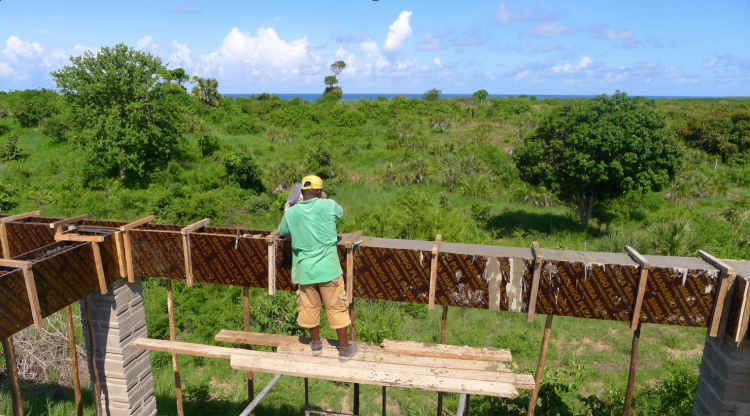
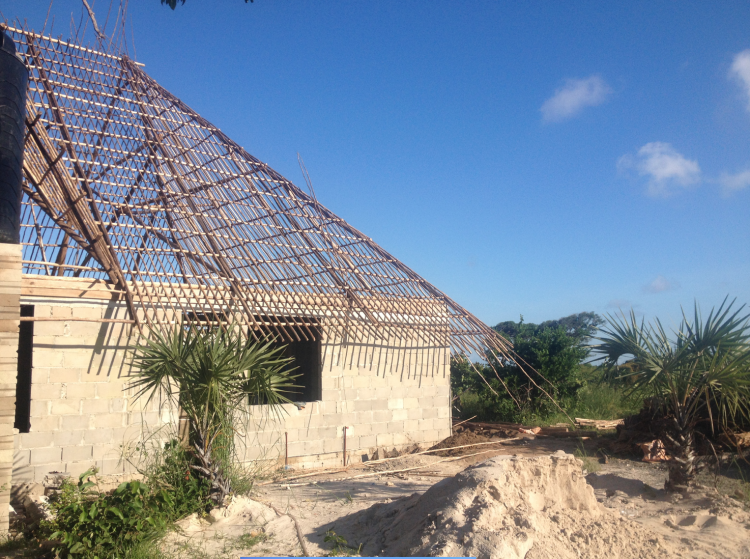
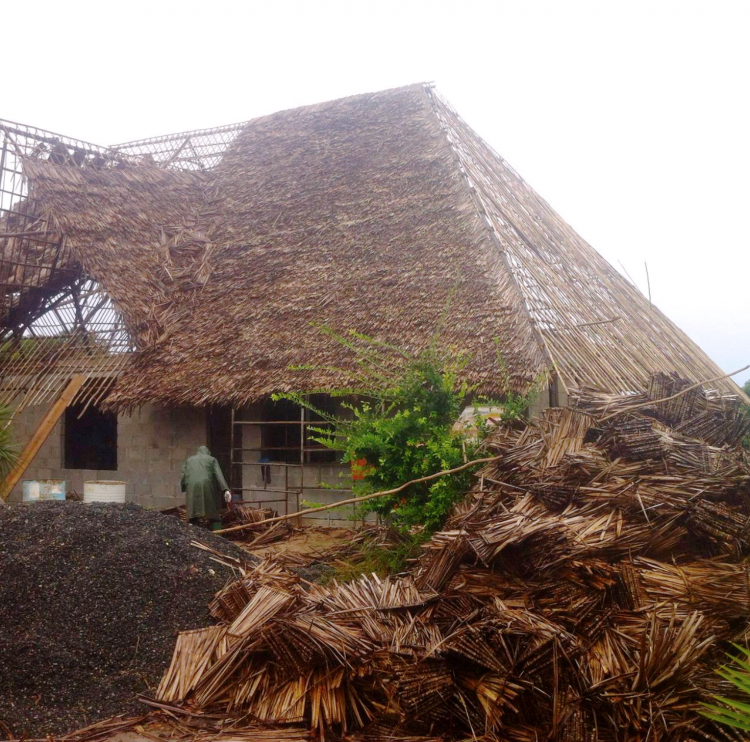
The structural requirements of this hip roof necessitated some important modifications to the shell structure. To support the roof, the ring beam had to be extended so that the ceiling construction could bear the additional weight. Furthermore, steel beams had to be installed afterward. These works were completed in March with the help of the architect and structural engineer. For cost reasons, most of the work was carried out by our own construction workers, although this took a little more time. In March and April, the time had come – the ceiling construction and the roof installation could begin. We decided (again for cost reasons) on a typical palm roof (called a Makuti roof) common in the coastal region. In the short term, it is the cheapest roof construction, but the palm leaves need to be replaced approximately every 7 to 8 years. The risk of fire is comparable to thatched roofs. Such a Makuti roof has excellent insulation value against the heat and does not cause such noise during heavy rain as the typical African corrugated iron roofs, which then become so loud that you can no longer hear yourself speak.
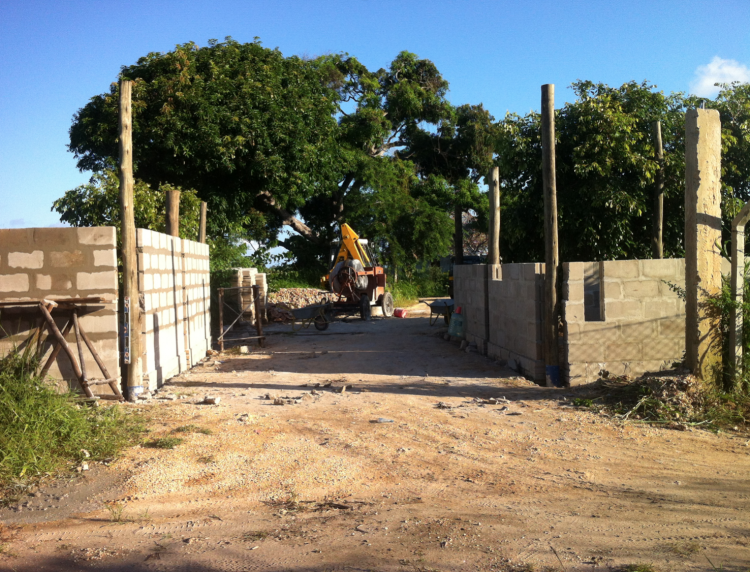
The electrical and plumbing installations were completed in April. The current water tower is still a provisional solution - a tower made of loose cement bricks with a 5,000-liter tank - but this system has proven effective for the existing guardhouse. As soon as financial resources are available, construction of the large water tower for the entire site will begin. A septic tank with a sewage treatment plant for a total of 3 buildings has also been installed. The wastewater from this system can be used for garden irrigation. Meanwhile, construction of the entrance has also begun. For the children's safety, the property needs a controlled access point. A guard will later monitor entries and exits.
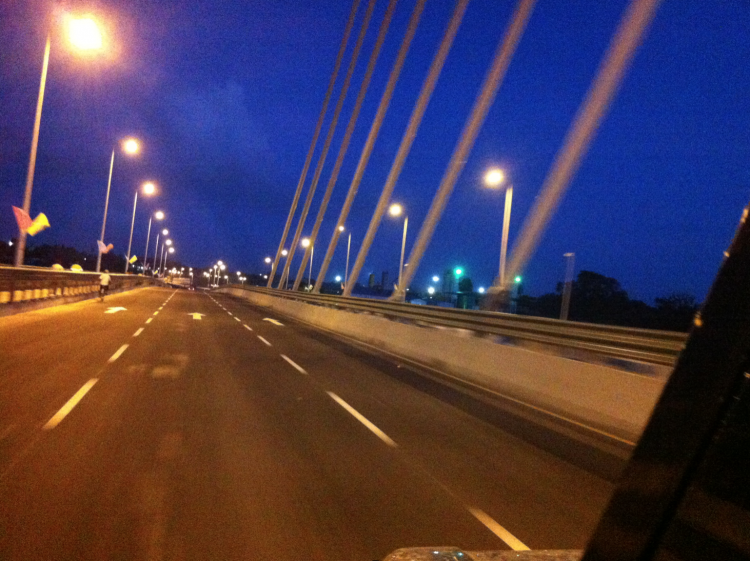
There are two really good pieces of news: public electricity has arrived in the village of "Puna" - not yet on the property itself, as four more electricity poles need to be placed between the main road and the property - but power is already in the village. The resulting celebrations cost us two sleepless nights, even though the village is about 800m to 1.2km away. Also, you now regularly hear the muezzin's calls from the small mosque at 4:30 AM, amplified through loudspeakers to all villagers. One sometimes wonders if it wouldn't have been more pleasant without electricity... The second good news: On April 16th, the 6-lane bridge connecting Dar es Salaam with our coastal strip was inaugurated. Waiting times at the ferry, which sometimes exceeded two and a half hours, are now a thing of the past. Our record is now one and a half hours from the property to the city center. We hope this will be even faster soon, once the road to our village is developed. Plans for this are already in the pipeline. We are curious how long it will actually take. Ultimately, it will take less than an hour to travel the 50 km to the city.
The positive developments so far have led to a doubling of land prices. While this doesn't offer us any financial benefits now, buying a property for an orphanage in this region would now be almost unimaginable. God led us to the right place at the right time. Now, the interior construction of the children's home is being tackled – interior plaster, screed, tiles, windows, and doors. We hope to complete this by the end of June.
For a few days now, 5 chickens have been living on the property. And Yese, the gardener who visited us from Kibidula - a mission and agricultural school (where Yese sometimes teaches) - has started creating a generous vegetable garden to help feed the children. The soil needs to be enriched with nutrients that were repeatedly washed out by the immense rainfall during the rainy season. For this reason, we have built a composting system that provides high-quality compost in a short time, namely within 2 to 4 weeks, and sustainably improves soil quality.
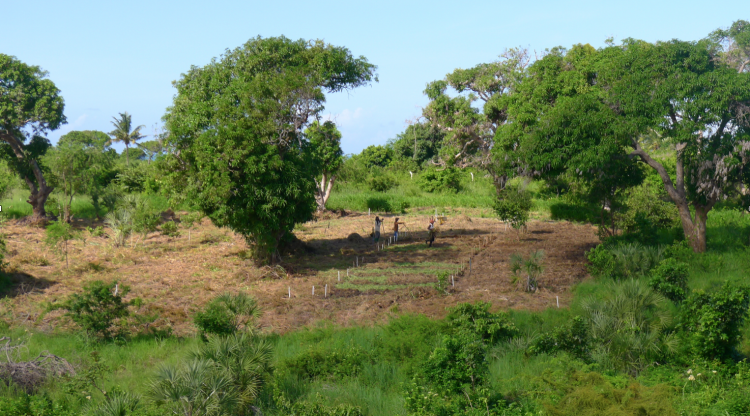
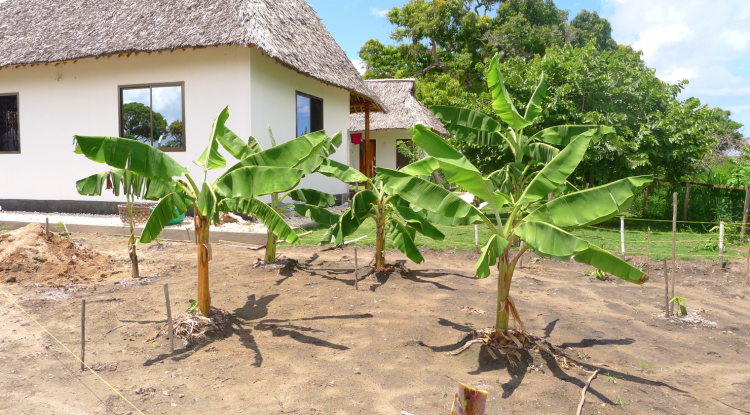
In total, 170 coconut palms and about 100 other fruit trees (including mangoes, limes, lemons, guavas, passion fruit bushes, baobabs, jackfruits, bananas, and cherimoyas, etc.) have been planted. The sooner these trees are planted, the sooner a harvest can be expected.
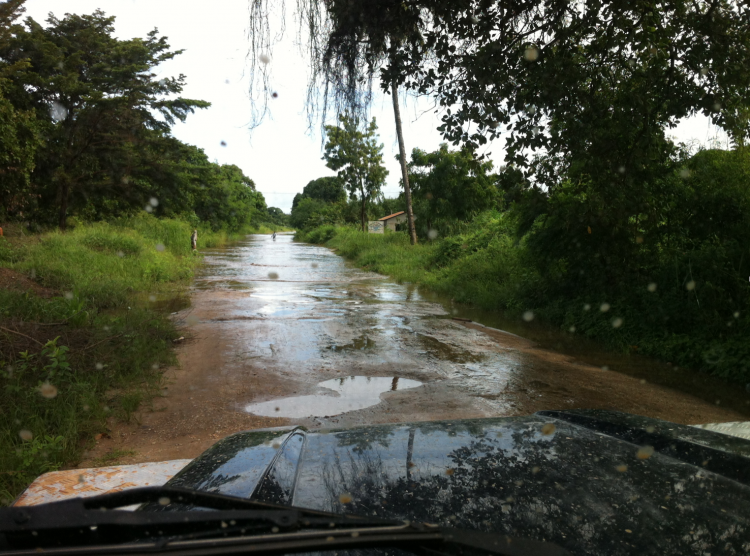
Oh yes, the rainy season. It's a chapter in itself. This is our first rainy season on the Tanzanian coast. At times, we were completely cut off from the outside world - that was not a good feeling. After 2 days of continuous rain, the road to Dar es Salaam partially turned into a deep lake (about 40 to 50 cm deep). Now we understand why we were strongly advised to get a Land Rover with a snorkel (suitable for driving through deeper water). None of us could have imagined how soon and how urgently we would need this type of vehicle here - and only 50 km from the big city. The beloved "Landy" has not let us down so far, and even where every other vehicle got stuck without outside help, we were able to continue after a few maneuvers that initially seemed hopeless.
At the end of this brief report, we want to give honor to our God. Although we could never be certain, He has always provided us with sufficient financial means whenever we urgently needed them. And our thanks go to all of you who have helped us through prayer and practically through financial support. For those who would like to visit Dunia ya Heri to support us with their gifts and skills in building one of the facilities, there are two dates:
- A construction team is planned for November/December 2016 (Nov 3rd to Dec 11th) to begin the shell construction of the second residential building.
- A four-week trip is planned for next year (presumably June 2017), likely organized by "Seminar Schloss Bogenhofen."
The cost for an approximately 4-week trip should be between 1,000 and 1,300 Euros (including flights, food and lodging, as well as a few days of wildlife or beach vacation). From "housewives" without experience to the most experienced craftsmen - everyone is invited to help with the construction of the buildings. Tanzania is certainly one of Africa's most extraordinary countries in terms of its diverse wildlife.
Yours

Thomas Küsel
Vice Chair
Dunia ya Heri
Yours

Judith Klier
Chair
Dunia ya Heri
Donations
To help as many children as possible, we rely on donations. Thank you for your help.