
First children's home almost finished
Impressions of Dunia ya Heri after two years of absence
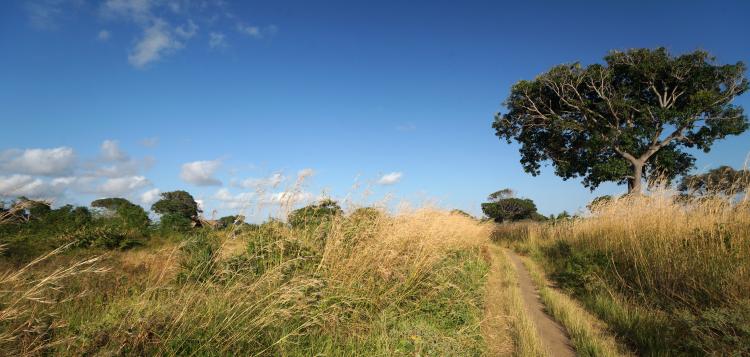
The coastal region of Tanzania, south of the megacity Dar es Salaam (House of Peace), is characterized by its untamed beauty (Image 00).
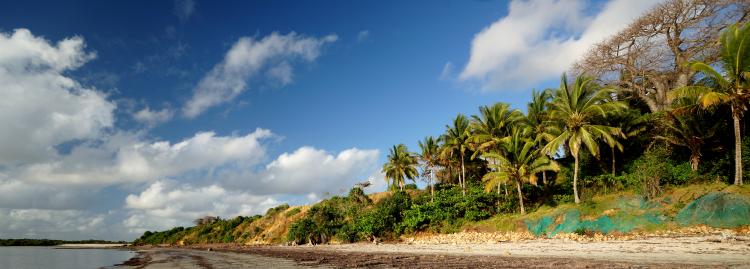
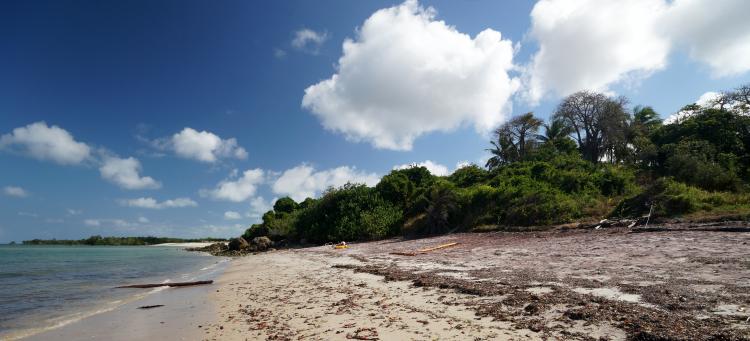
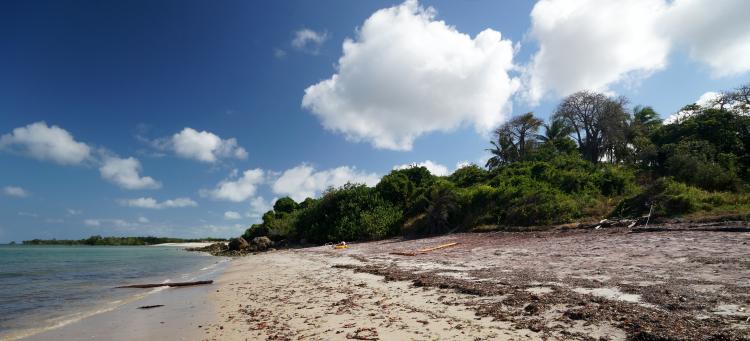
No high-rise hotels, no crowded beaches (01),
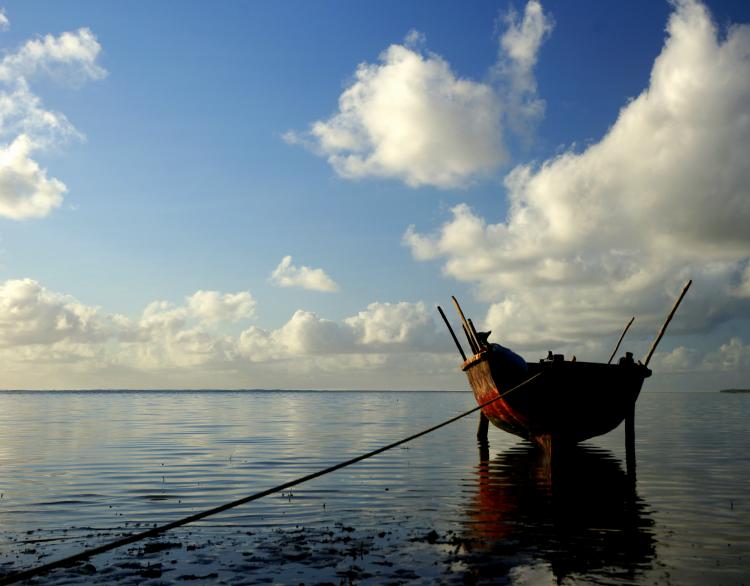
only a few fishermen and their boats define the scene (02 a).
Compared to Germany, the country is sparsely populated. An area almost three times the size of Germany is home to only 49 million people. Here and there, one still encounters traces of Germany's colonial past (German East Africa) – for example, in the term "Schule" (school), which has become part of the national language Swahili. (In addition to Swahili and English, there are about 125 tribal languages.) The Evangelical Lutheran Church (02 b),
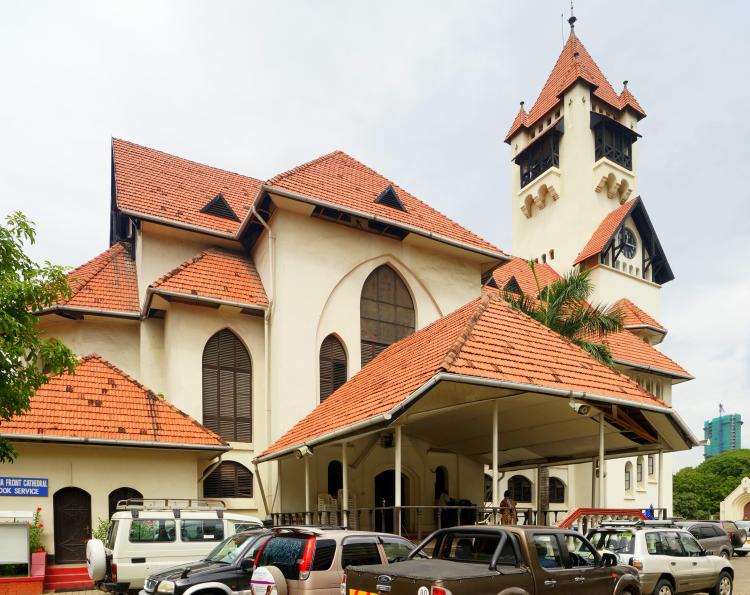
which can be seen from the water in Dar es Salaam, also harks back to an era that ended in 1918. After the lost war, the country came under British administration until it gained independence in 1961.
In the interior of the country, the proportion of Christians in the population is 30 to 40 percent – among them quite a few Lutherans. The remaining 60 to 70 percent are – in roughly equal parts – Muslims and adherents of animistic nature religions. Precise figures are not available. Because the government considers the question of religious affiliation too sensitive, it has not been asked in censuses since the 1960s. On the coast and on the island of Zanzibar, which belongs to Tanzania, there are significantly more Muslims. In Zanzibar, they make up 98 percent of the population. But also on the mainland near the coast, most people are of Muslim faith. The centuries-old trade with the Arab world has left its mark here. In the village of Puna (03),
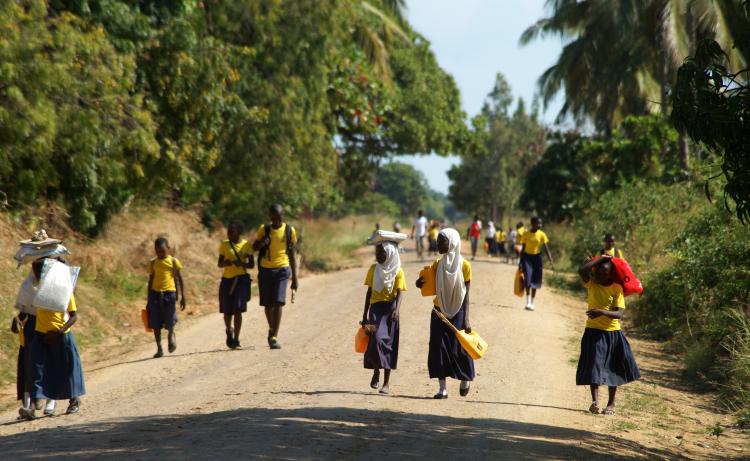
near which our orphanage project is located – about 50 km south of Dar es Salaam and about one kilometer from the Indian Ocean – the proportion of Muslims in the population is around 80 percent.
Almost exactly two years ago, I was involved in the decision to purchase a plot of land where the Dunia ya Heri orphanage project is now being built. At that time, Judith, Thomas, and I saw a wild and practically untouched piece of bushland with some scattered, stately mango and baobab trees, as well as coconut and fan palms. Apart from a dirt track running past the property, leading from the unpaved main road to the beach, there were no traces of civilization: no water or sewage supply, no electricity, no fields, no paths – not even simple African huts.
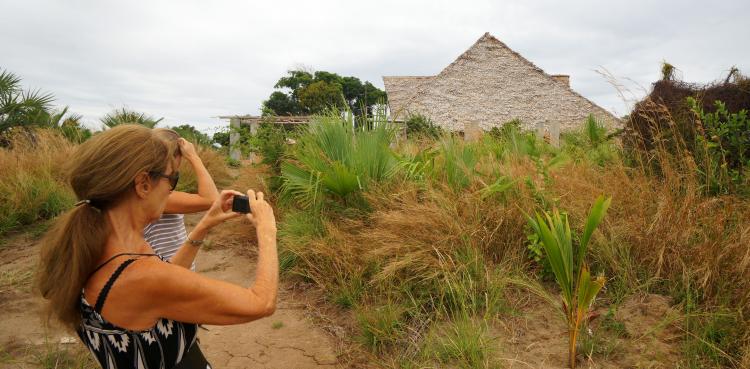
When I accompanied Judith on a trip to Tanzania in September 2016, a completely different picture presented itself: Behind a high fence, a new village seemed to have emerged. After a bend in the path, the approximately three-meter-high bush grass revealed a view of several Makuti roofs (04),
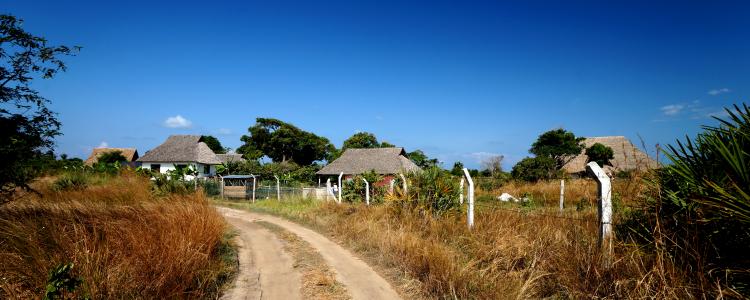
not entirely dissimilar to German thatched roofs. In the African version, dried fan palm leaves are woven into mats and processed.
We entered the premises through the shell of the gatekeeper's house, for which our African friend Gasper welded a gate during my short stay. Thomas and Beate had picked us up from the airport in their over 10-year-old Land Rover (19), whose air conditioning wasn't working at the time.
To our right, we saw the living quarters of the gatekeeper and guard (06, 07).
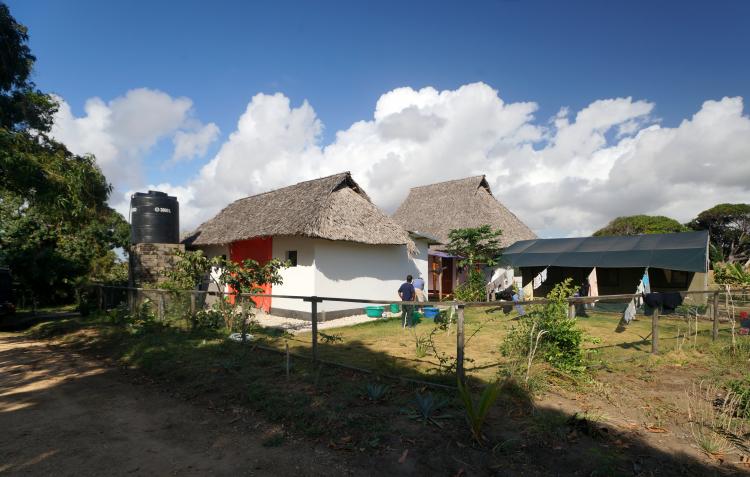
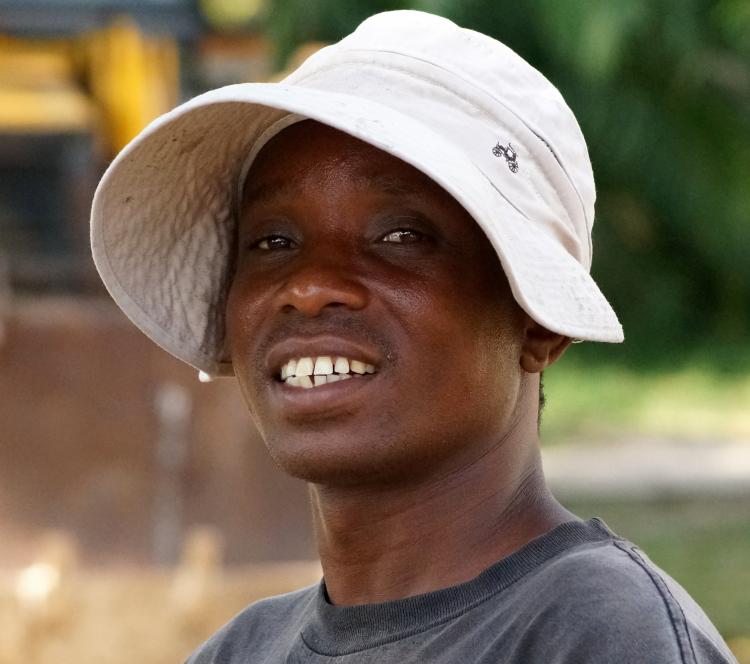
It was the first building on the property and had already been erected – after consultation – by African friends before Thomas and Beate's arrival. Here, there are also a military tent, where Thomas and Beate have been living for over a year now, and a provisional water tower. On the small piece of corrugated iron roof above the two showers are panels of a photovoltaic system. It supplies electricity to the chest freezer, which has been converted into a refrigerator, and some (somewhat dim) lamps.
The buildings are laid out like a Lower Bavarian three-sided farmstead. Framed by the sleeping accommodation with two rooms (one occupied by Judith, the other by the gatekeeper couple), the Küsel military tent, and a building with wet cells (the aforementioned two showers, two toilets, an open kitchen (10), and a pantry),
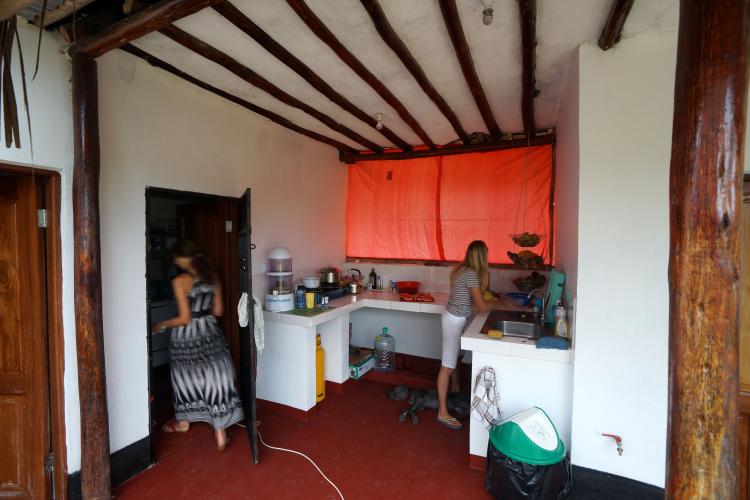
there is a green inner courtyard (08, 09).
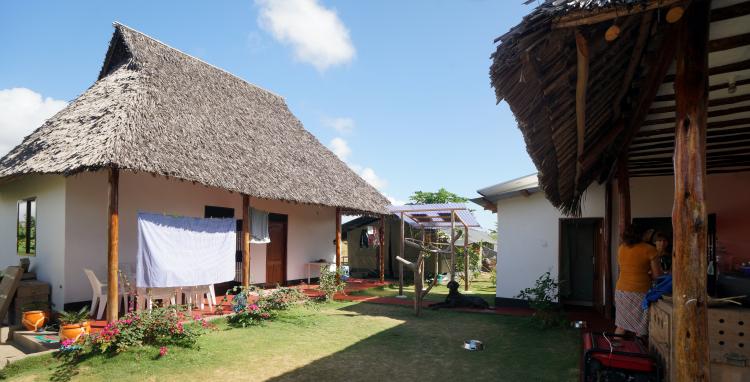
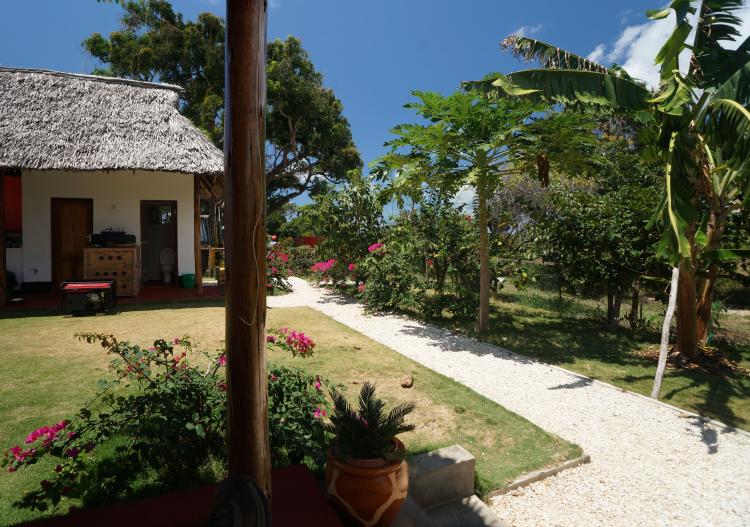
It is currently the center of social life. Since cold is practically unknown at these latitudes just south of the equator, and one is usually grateful for every fresh breeze, life mostly takes place outdoors – including all meals (11).
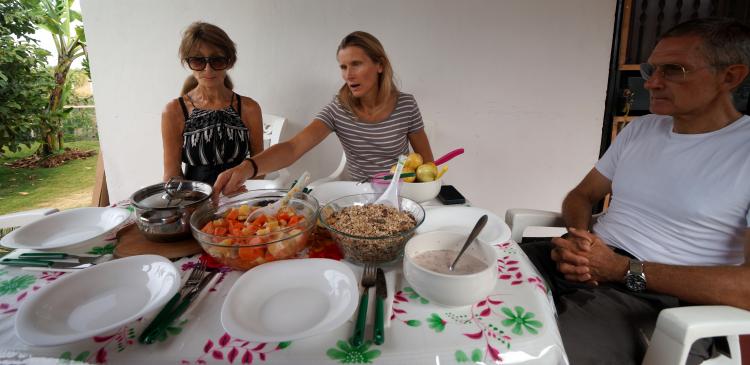
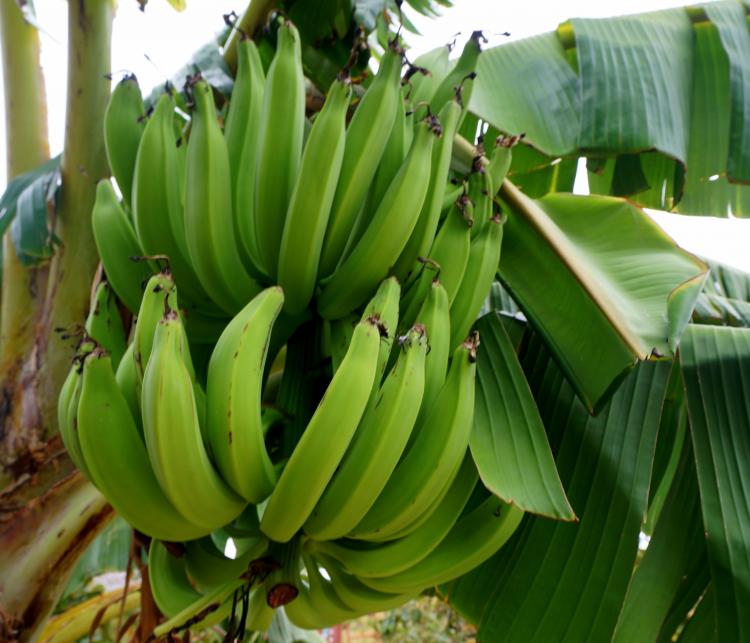
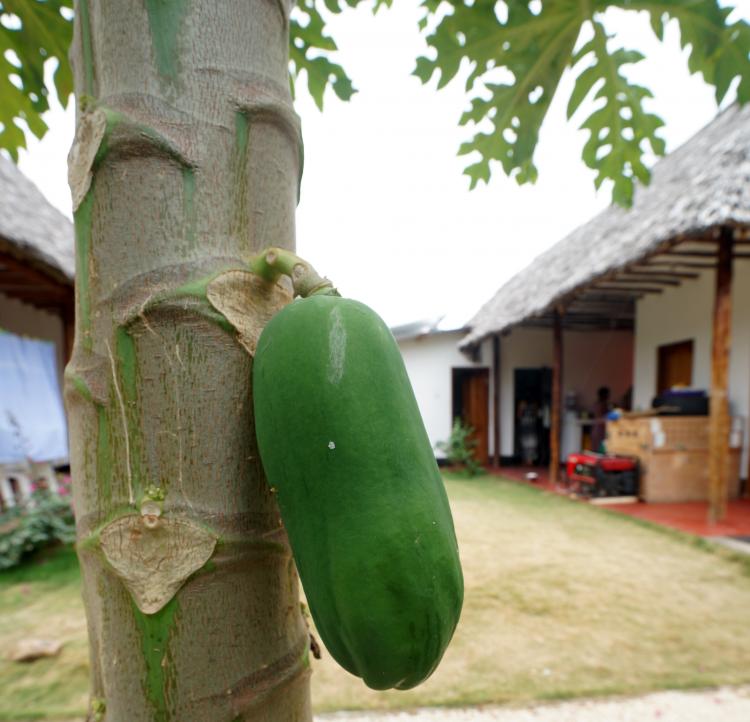
Thanks to the African sun and good water, nature produces much of what is needed for life (12, 13).
The dining table also serves as a desk (14, 15)
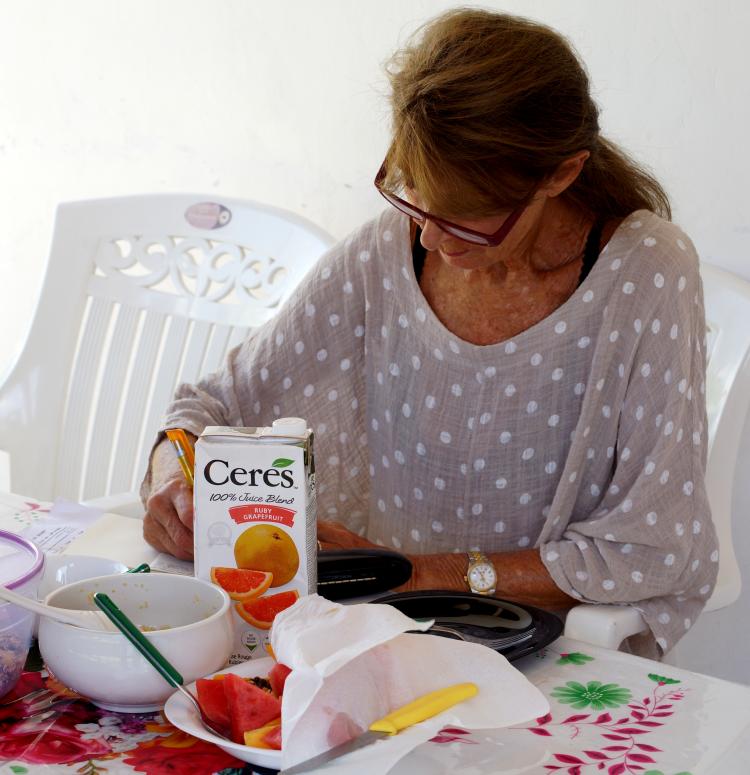
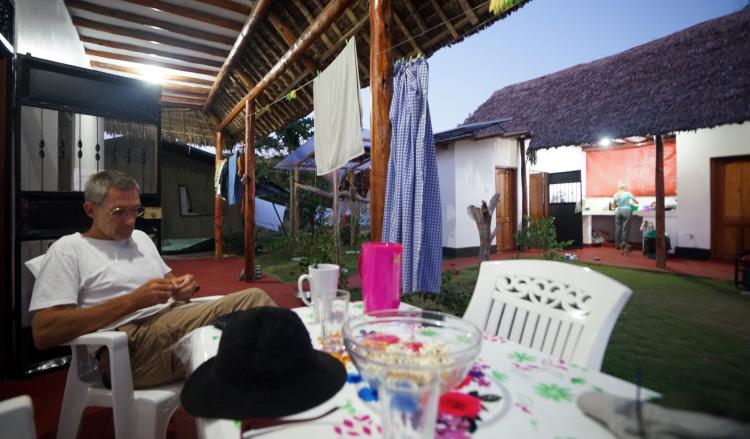
and is a meeting point for the numerous visitors who, despite the arduous journey, seem to enjoy coming by. Beate can usually be found in the kitchen, where, sometimes assisted by the gatekeeper's wife, she prepares fantastic fresh salads and delicious vegan meal after meal – and also takes care of the four-legged friends and the feathered housemate (16).
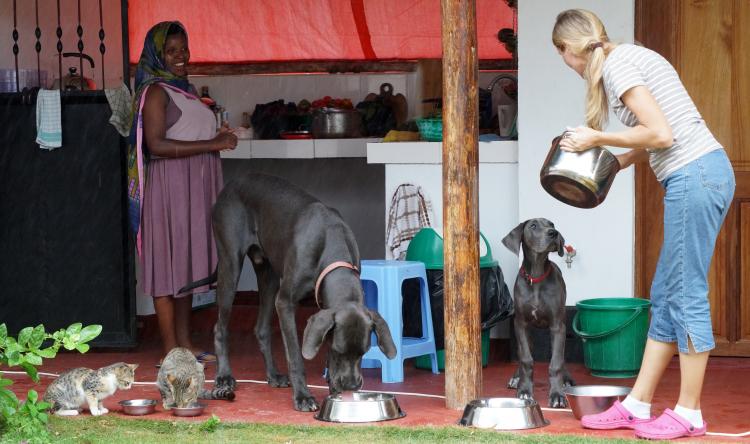
For the well over two-year-old male Great Dane, there is now also a three-month-old female companion. Dogs of this size are practically unknown in Africa and inspire immense respect among the locals – which, of course, also protects against theft.
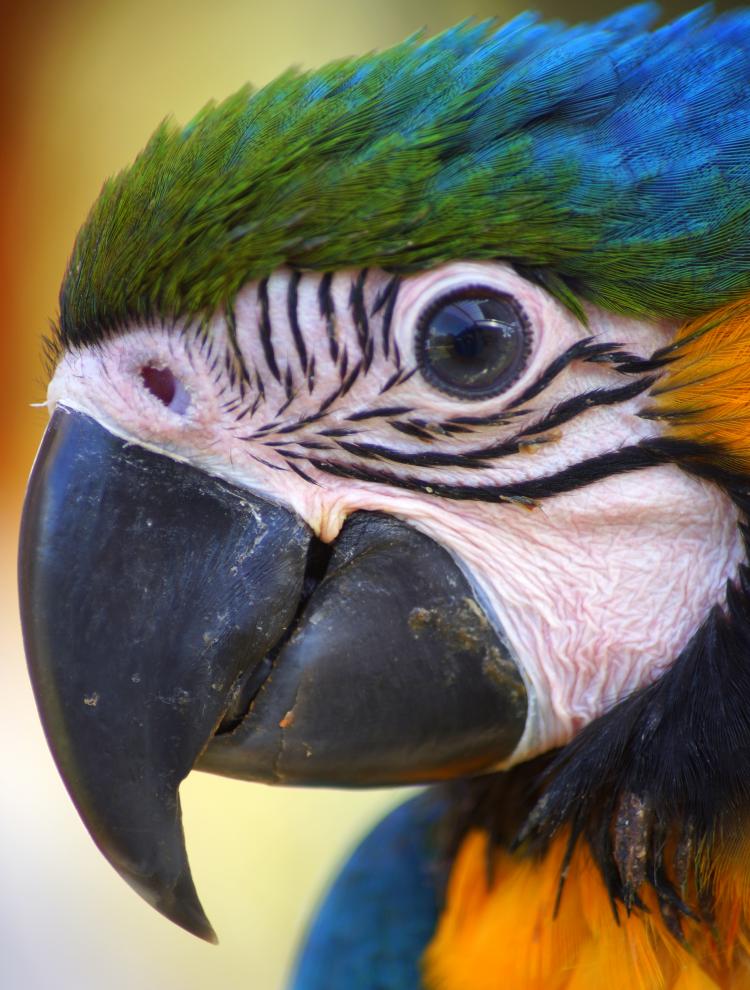
In addition to the two dogs, Thomas' private zoo also includes two cats and a Brazilian macaw (17) (Max – or, as it's called here, where there's no harsh sound like the "X" in the local language: Mass).
Surprisingly, all four-legged animals eat the same food with obviously great appetite: a predominantly vegan meal prepared by Beate, consisting of rice, beans, celery, cooked and grated raw carrots, salmon oil, brewer's yeast, and perhaps a few dried sprats.
Adjacent to the open garage (18),
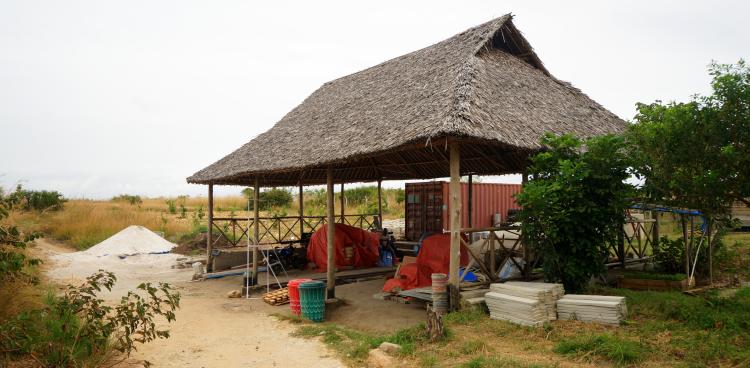
which houses cement, wheelbarrows, and other water-sensitive building materials and tools (21)
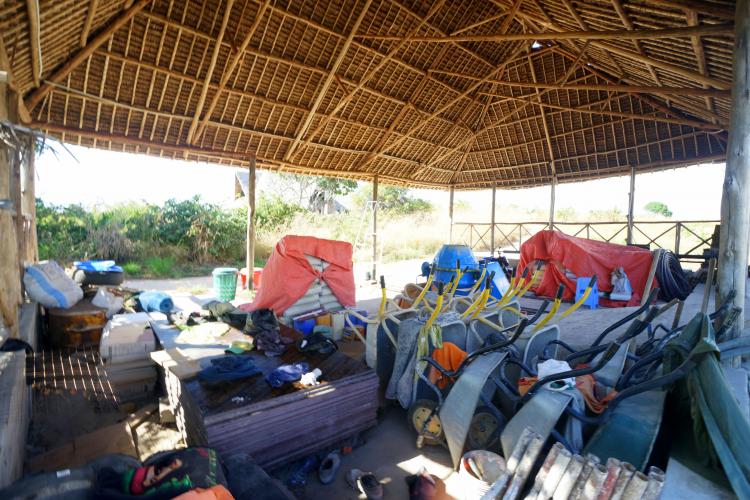
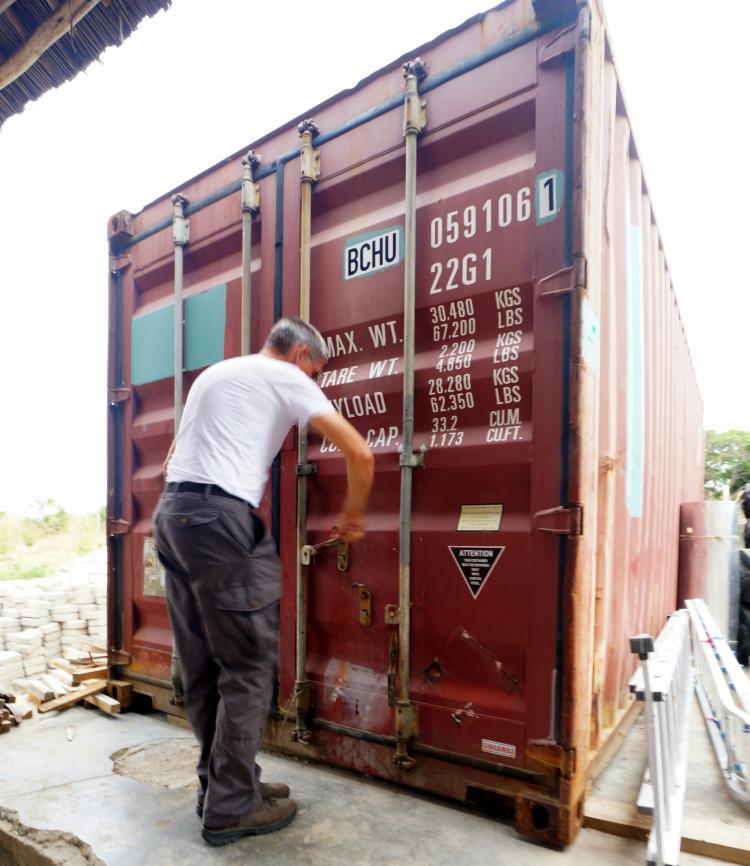
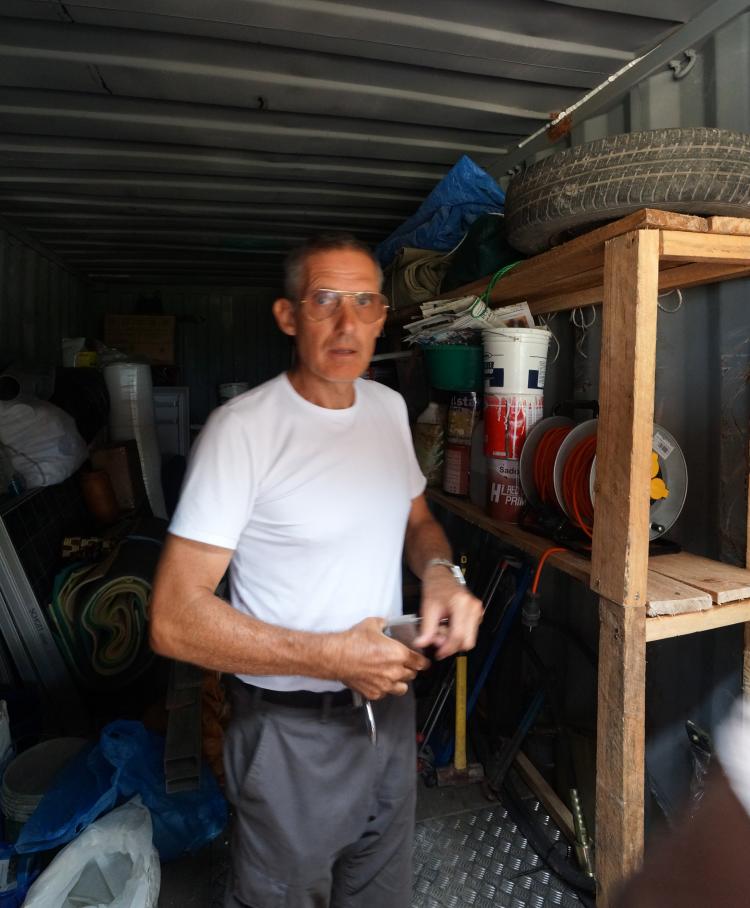
and is not far from the gatekeeper's and guard's dwelling, is a securely lockable steel container (22, 23).
The garage also serves as a place for daily morning devotion (24).
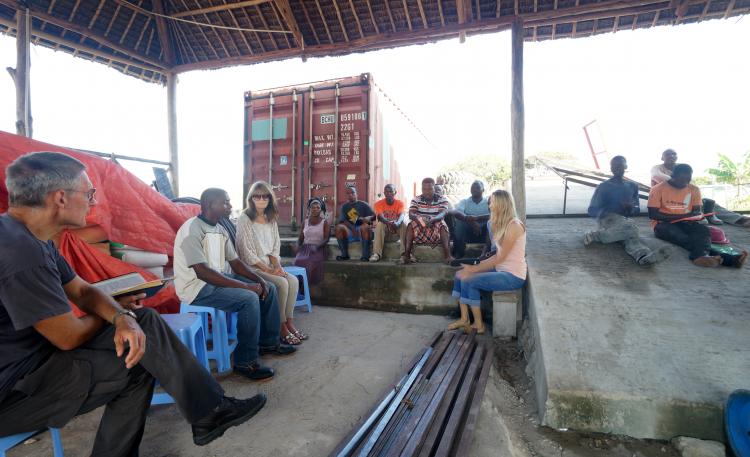
Participation is, of course, voluntary. Of the approximately 20 workers (about half of whom are Adventists) I saw at the orphanage construction site (27) during my visit, a good dozen participated in the devotions.
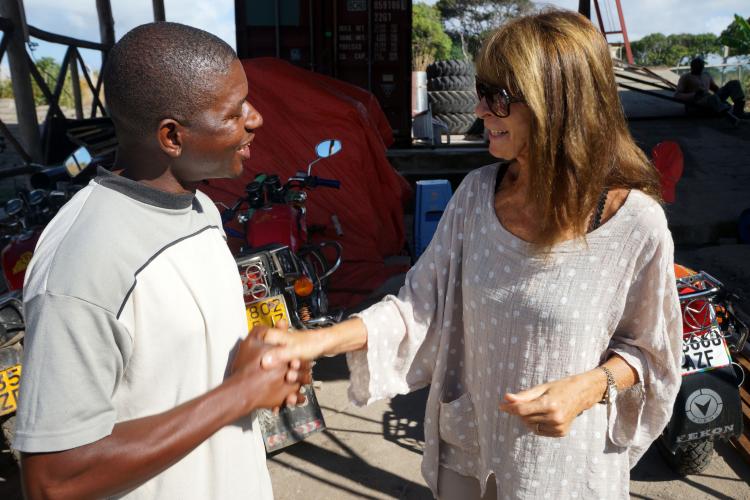
Even if most workers understand at least a little English, Thomas works with the help of a translator (25).
The first children's home
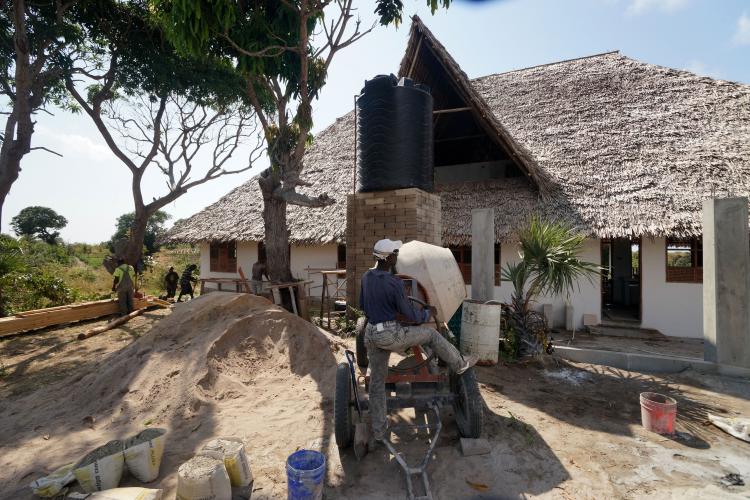
The first of five children's homes presents itself most impressively (26).
This building, which is almost finished, is intended to become a refuge for infants and toddlers. Originally planned as a flat roof construction, it now has a stately Makuti roof with a spacious second floor (35, 36).
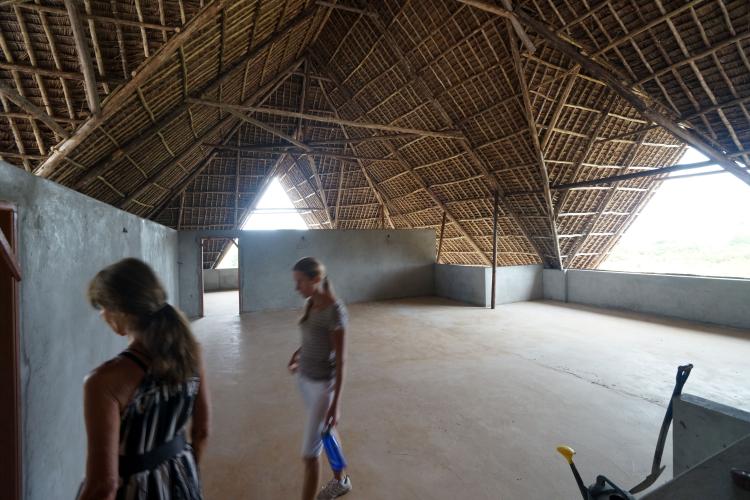
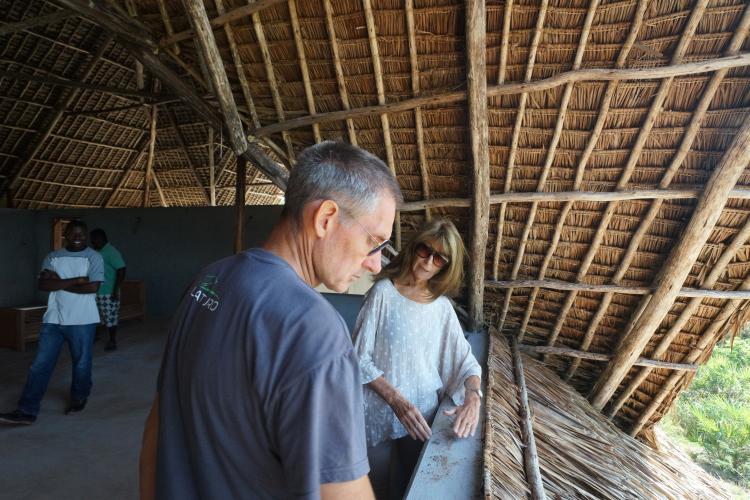
An arcade-style walkway (with sturdy concrete pillars), whose roof will soon be fitted with solar panels, leads into a spacious open lobby (28),
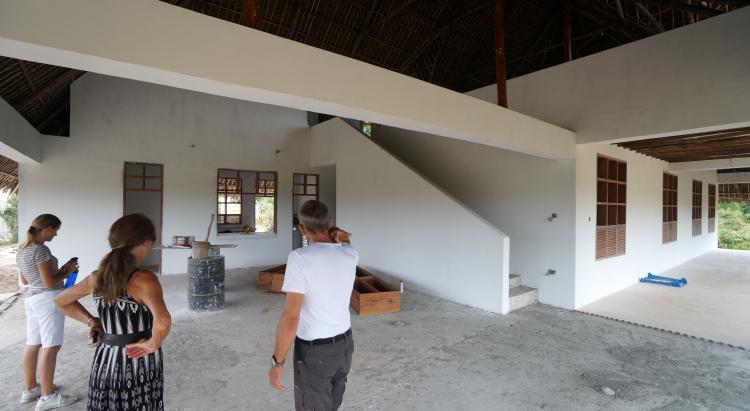
which is also intended to serve as a dining hall (the screed was supposed to be poured on the day of my departure). From here, one reaches an open veranda and, on the other side, the kitchen (where tiles were just being laid), a storage room, and the various rooms.
Even though there are certainly qualified and diligent craftsmen in Africa, professional skill and enthusiasm are not always a given (29).
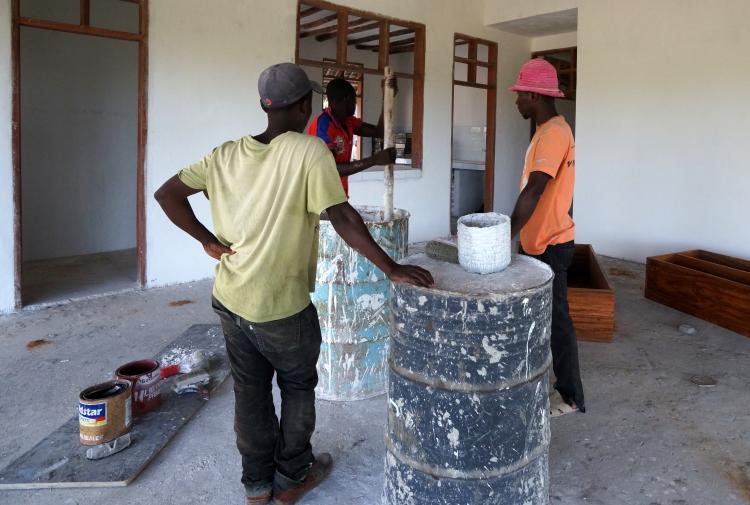
Frequent work meetings (30) and the communication of specific desires are required.
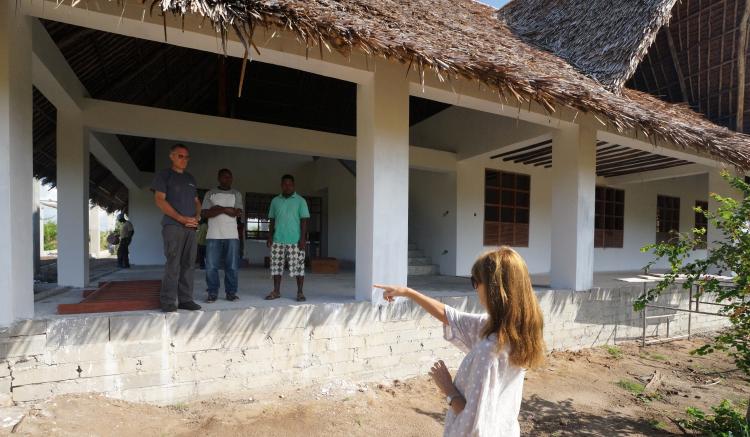
Accurate measuring (on-site and during component manufacturing) is not a given. Accordingly, things don't always fit as they should (31).
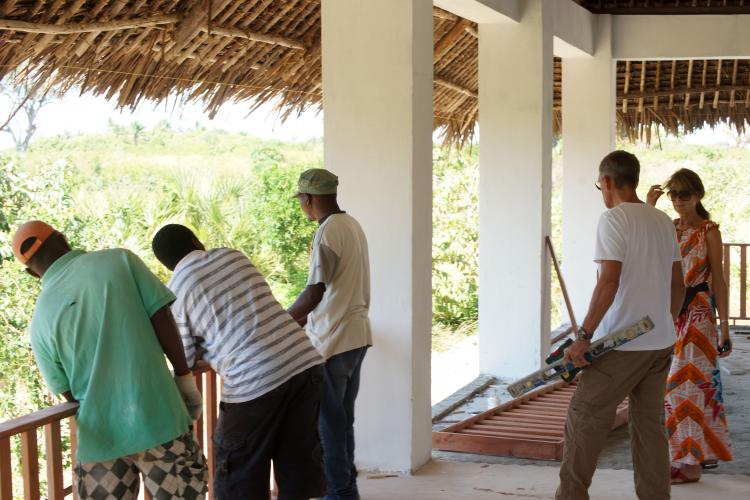
But somehow everything is made to fit – even if that means a bricked and plastered pillar is worked on with a hammer and chisel to install a wooden railing (instead of sanding the wood).
As our inspection revealed, the changing table in the infant room was considerably too high (32). (It would probably have required caregivers two meters tall.)
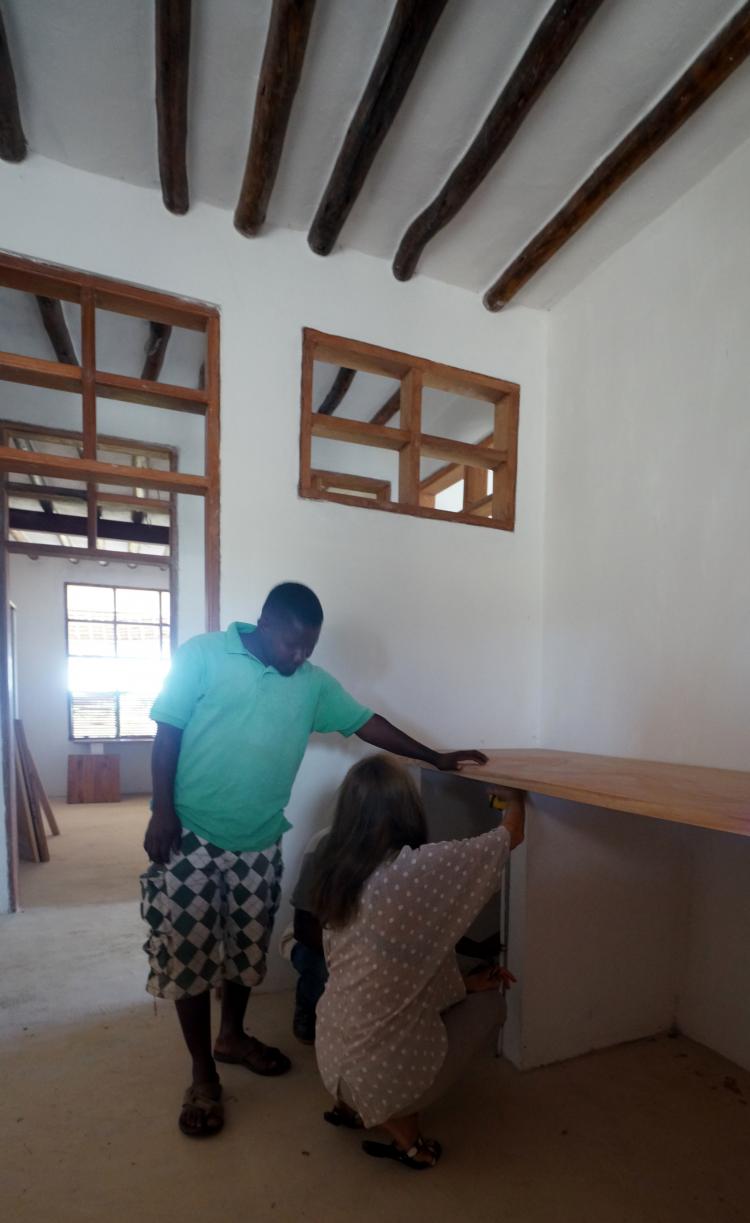
It had been installed when Thomas and Beate were on their way to the airport to pick up Judith and me. But with a grinder and a little mortar, the problem was quickly solved (33).
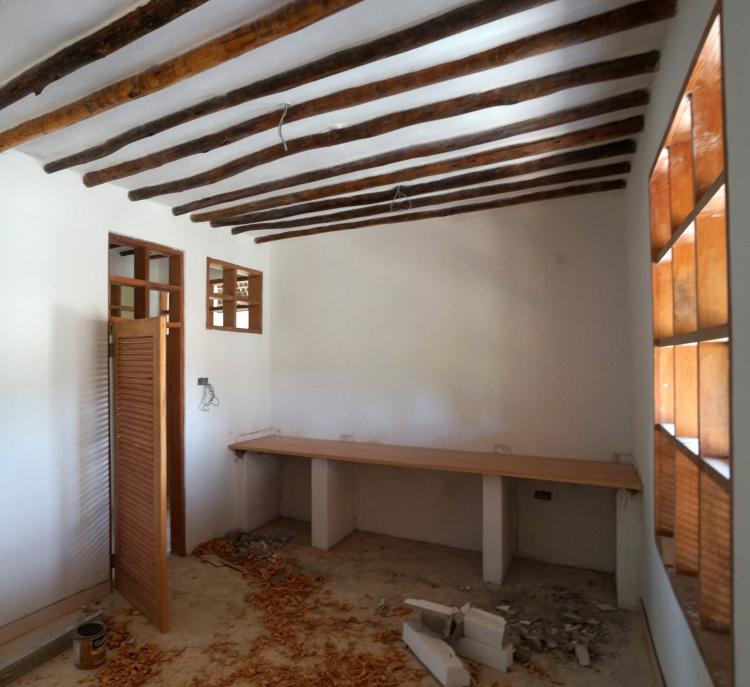
The woodwork made of African teak are real gems. The doors, door frames, kitchen cupboards, windows, and slats are already installed. What's still missing are the fly or mosquito screens, for which the frames were being made during my visit. The large open windows provide always welcome drafts and a pleasant indoor climate (34).
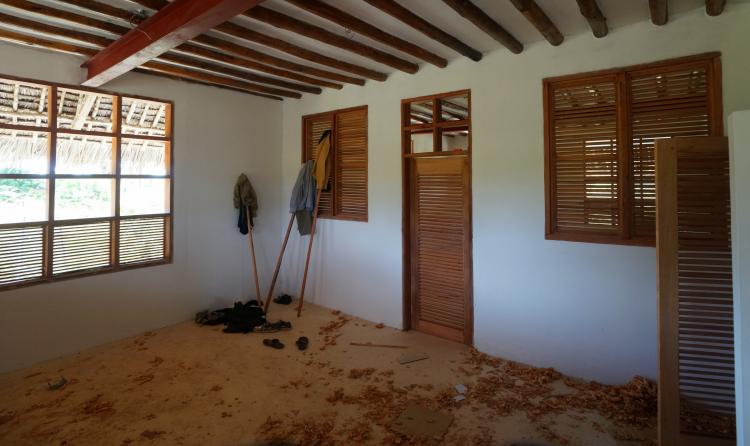
Glass panes are not necessary. The wet cells, i.e., the rooms with showers, sinks, and toilets, are bricked and tiled. Only the sanitary fixtures still need to be installed.
From the upper floor (35, 36)
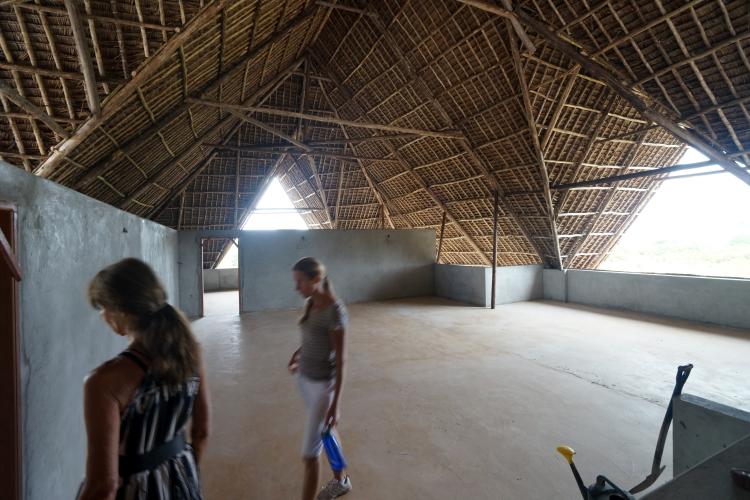
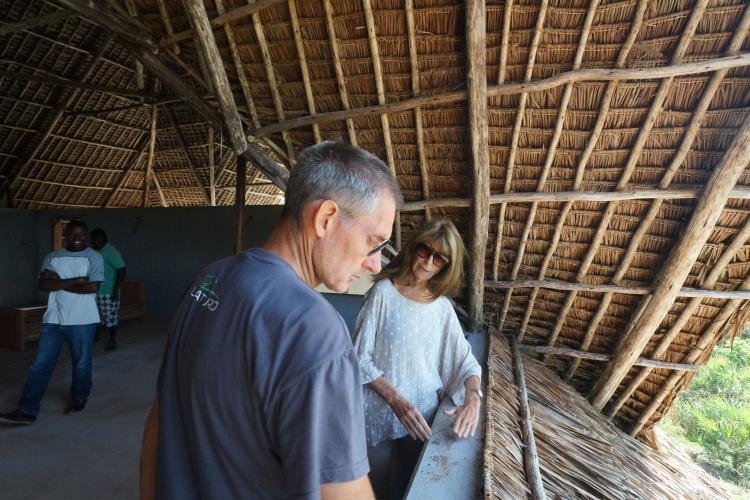
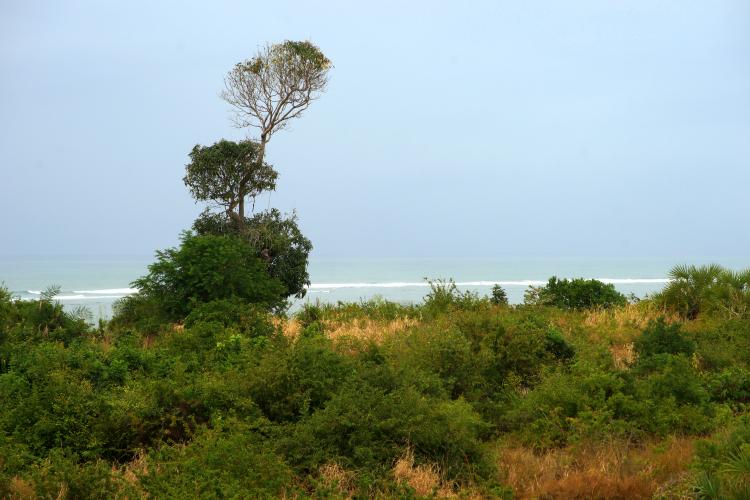
one has a view of the sea on one side (37),
and of the vegetable garden on the other (38),
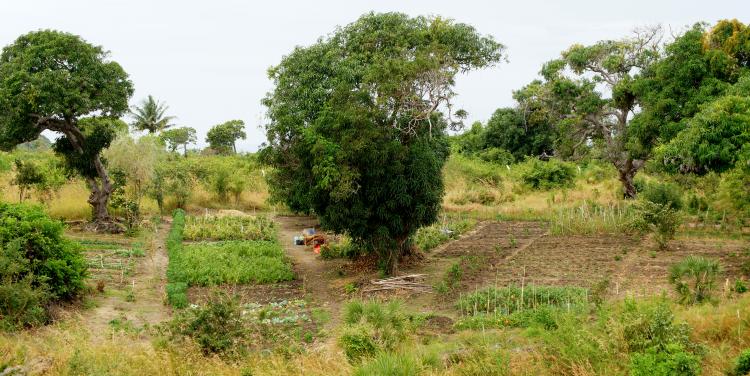
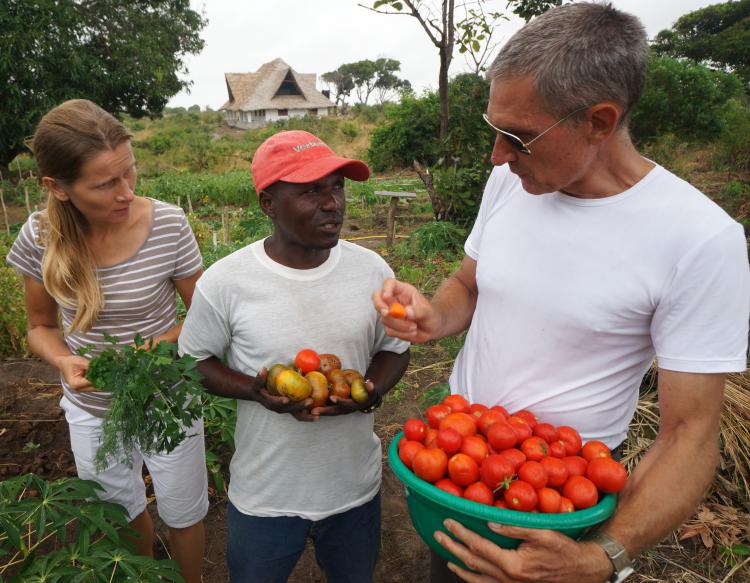
which was competently laid out by Yese (39), the gardener.
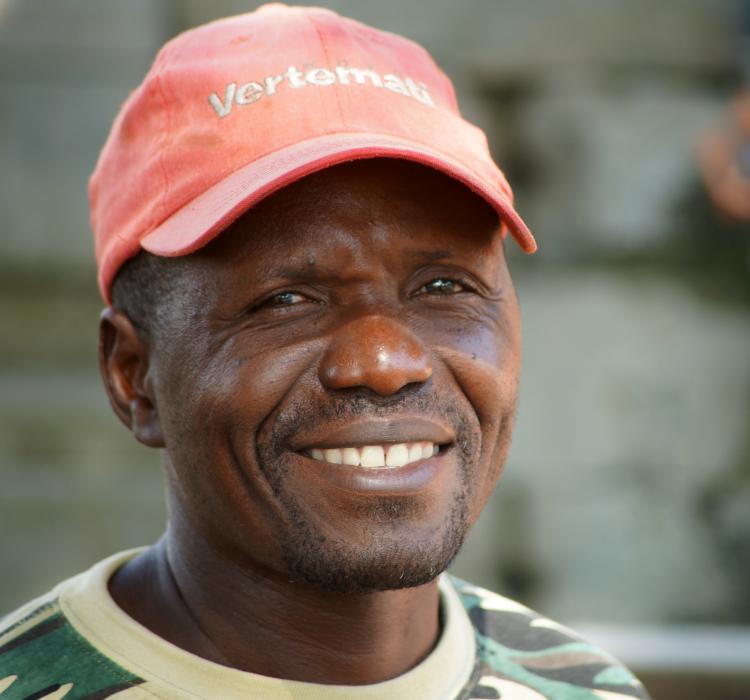
The Garden
Yese is, in a way, on loan from Kibidula, a farm with a training center for Bible workers, operated in the southwest of the country by a self-supporting Adventist mission organization. Both Dunia ya Heri and Kibidula belong to OCI, the Adventist Outpost Centers International.
Yese, who commutes between the two facilities approximately every two months, knows his craft (40, 41).
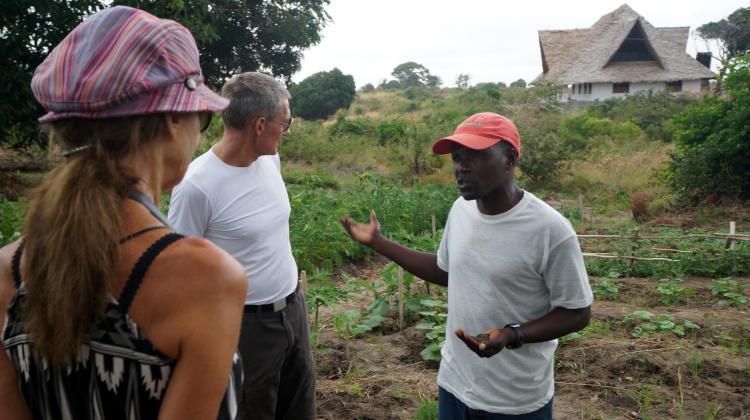
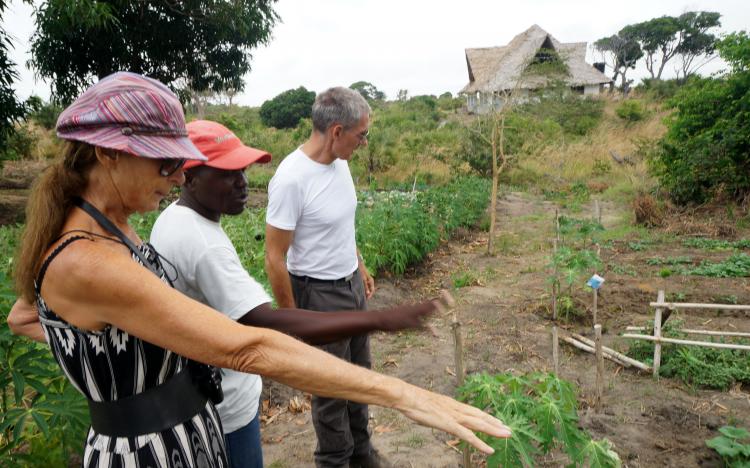
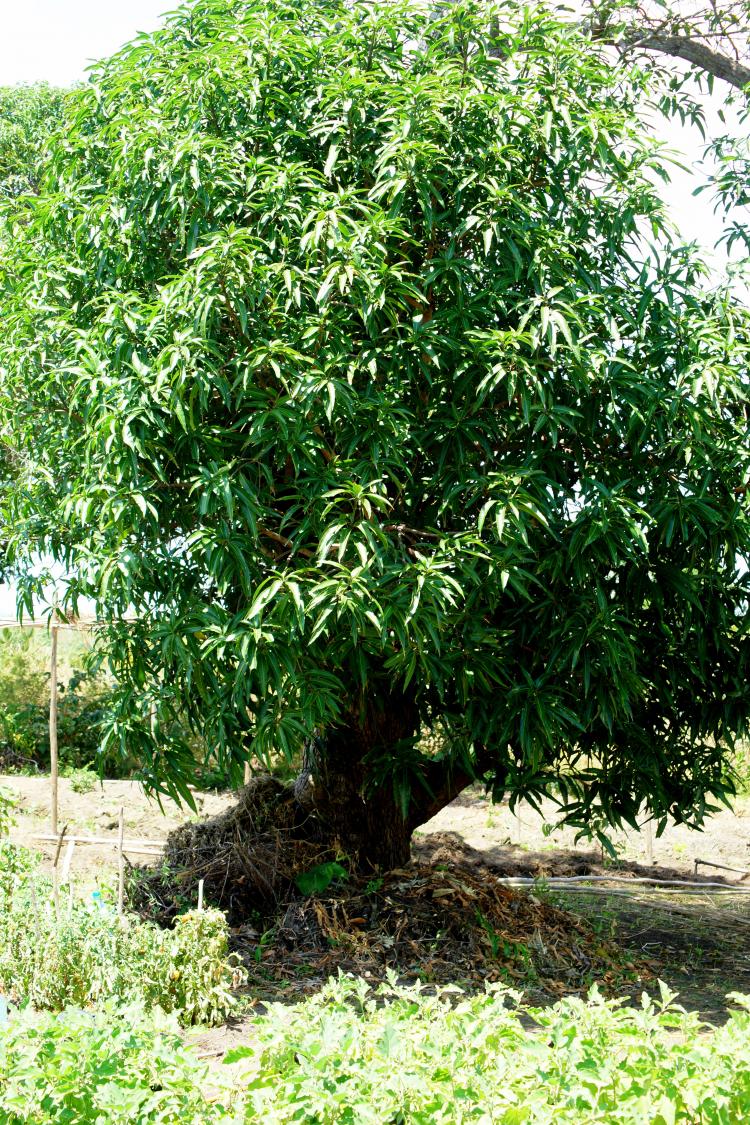
He explained to Judith and me how he transforms nutrient-poor soil into fertile garden earth. Supported by the climatic conditions, he produces good topsoil with his compost pile within two to four weeks. Even an old mango tree that was dying, he brought back to lush life with his composting method (42).
To protect the young vegetable plants (and almost everything grows here due to the favorable climate) from the scorching midday sun, he built a wooden frame (43) together with his helpers,
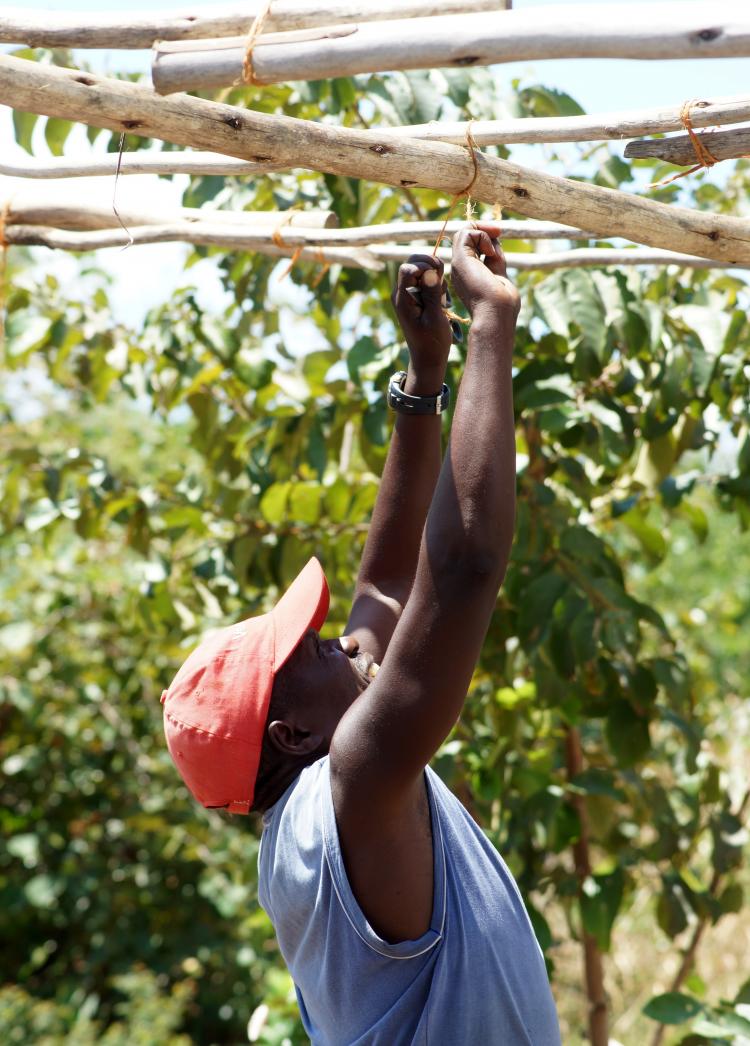
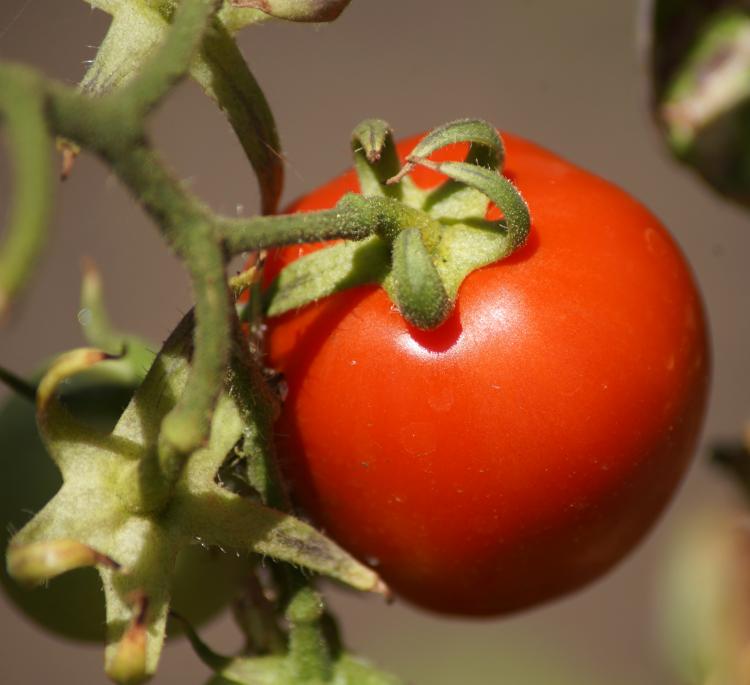
which was then covered with straw. Exceptionally tasty tomatoes that truly taste like tomatoes are part of the daily harvest (44-46).
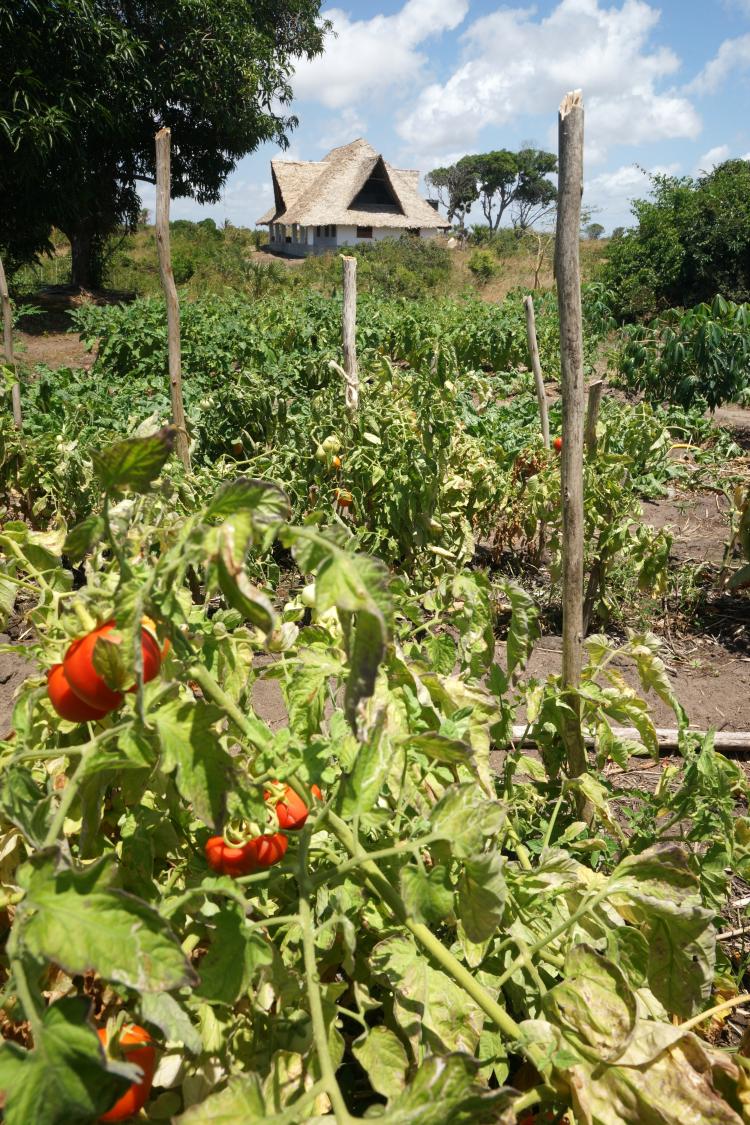
Even though the beach is only a seven-minute walk away (47, 48),
Thomas and Beate rarely go swimming. I, too, had to pack my swim shorts unused. Of course, this is also because the day (with its precious daylight) is always only 12 hours long, and everyone involved in this orphanage project is eager to make the most of the time. The sun rises almost exactly at six (when I was there, at 6:11), and sets just a few minutes after 6 PM – quite suddenly.
Dunia ya Heri, the blessed earth, has undergone an astonishing transformation within the last two years. Only a few more weeks, and the first children can be welcomed. What is still urgently needed now are a proper large water tower and a house for the administrator and his wife. When we think of camping, we think of fun and vacation – but also of a limited time of only a few days, at most weeks. Thomas and Beate have been camping for over a year now. We hope that they will be able to move into a proper home again before another year passes. A location has already been selected.
Gerhard Padderatz
Donations
To help as many children as possible, we rely on donations. Thank you for your help.