
Newsletter November 2020
Dear Friends,
It's time again for an update from our tropical Tanzania.
A Look Back
Almost exactly five years ago, we began construction on the orphanage project. Looking back after these five years fills us with gratitude. We could never have dreamed that our project would develop so wonderfully.
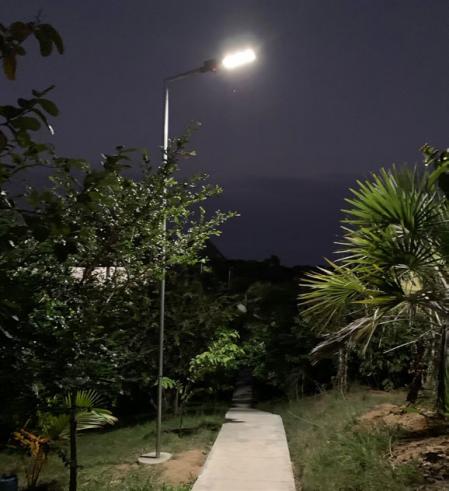
As if by a miracle – and not least thanks to intensive support – we were able to build the infrastructure of the orphanage over the past few years. This includes the home for babies and toddlers, a home building for our boys and another for our girls up to 12 years old, a school building with two classrooms that can also be used as a chapel or assembly hall, two residential buildings for staff, a house that Beate and I were able to move into last year, a garage/shed, two water towers, various septic tanks and sewage treatment plants, three solar parks, a large playground, a small workshop, a building at the entrance, a chicken and goose coop, a vegetable and fruit garden with many newly planted fruit trees, as well as paved walkways between the home buildings with nighttime lighting.
Sometimes we weren't sure if the financial resources would be sufficient to complete the construction projects that had already started, but often at the last moment, we received the necessary financial support.
Our Children
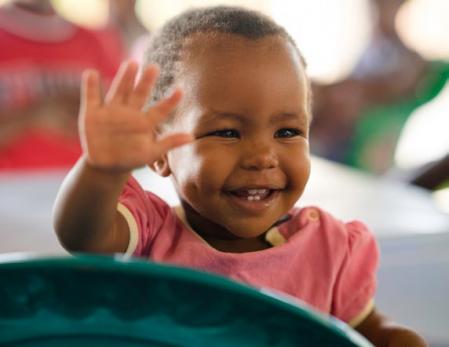
We want to dedicate this newsletter – not least because of the upcoming Christmas season – especially to our children.
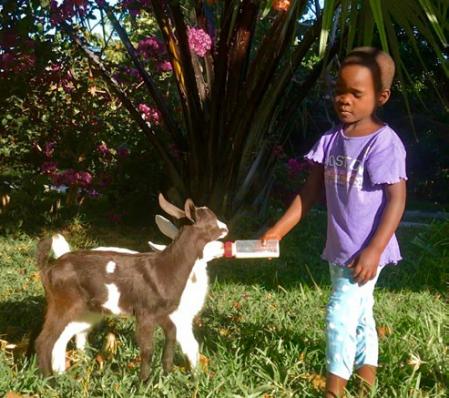
It was a Friday evening in June. We received a call from the youth welfare office at an unusually late hour. The responsible social worker informed us that the grandmother of one of our children had contacted the social welfare office and decided to take Jana* in. Jana had come to us as a 4-week-old baby. By then, she was three and a half years old and had settled in very well with us. For us, she is a very special girl.
We were very sad about this news and could hardly rest that night. We felt the need to ask God for His help and to put the future of our little Jana into His hands.
On Saturday afternoon, a Land Cruiser pulled up. A woman, accompanied by the social worker, got out, and we sat down together on the terrace of our daycare center. Jana was still in the garden with one of the mamas and the other children. Our social worker took some documents out of her briefcase and began to fill out the paperwork according to formalities. We were told that the woman was the sister of the disappeared mother, sent by the grandmother from Arusha, nine hours away, to pick up Jana. I offered to show her Jana's children's room while the formalities were being processed. But the woman didn't want to see it. She also made no contact with the child. Beate and I became skeptical. So I began to ask the woman for details about the biological mother's disappearance. We wanted to know how the grandmother came to believe that Jana was her granddaughter.
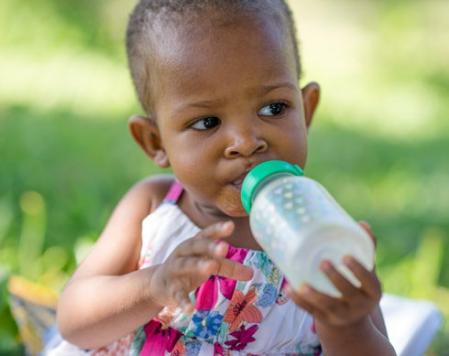
While the woman gave some brief, dismissive explanations and then rather abruptly stated that she needed Jana and finally wanted to pick up the child, I felt increasingly uneasy. Strong doubts arose, and I prayed silently, asking for God's help. I suggested a genetic test to determine the child's origin. Theresia, the social worker, listened to my suggestion. Suddenly, she put her pen aside and said, "That's enough – Jana is staying at Dunia ya Heri today!" Theresia explained that the story about the disappeared mother did not match the story on file with the youth welfare office. She wanted to involve the local police authority to investigate the matter further. Both left our orphanage shortly afterward, their mission unfulfilled.
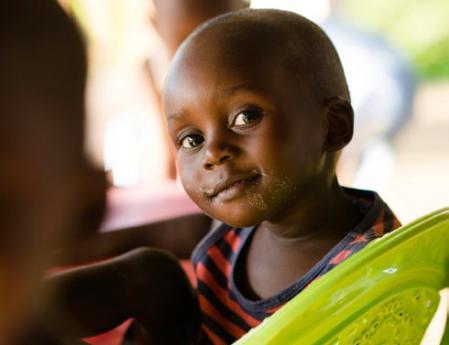
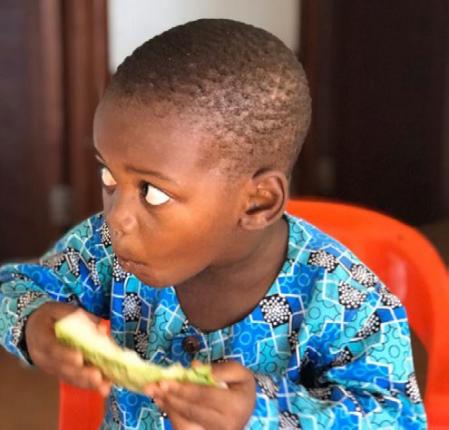
We are very happy that Jana is still with us today. It could have turned out very differently. If we hadn't asked skeptical questions, if Theresia hadn't had the courage to stop the action – it's unimaginable what our Jana would have faced. We experienced God's assistance in this event.
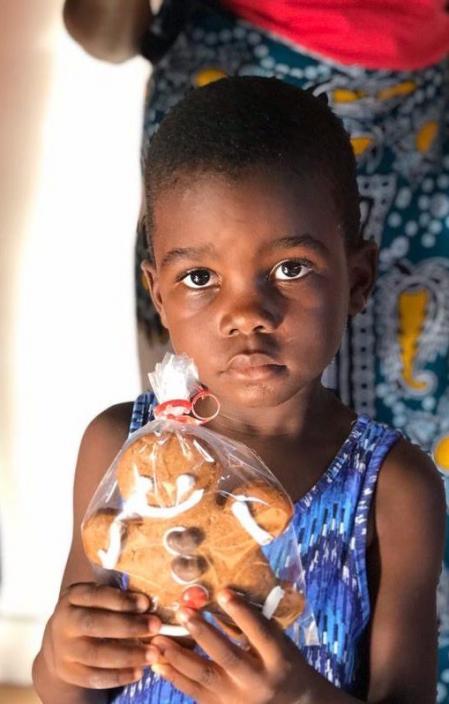
A year ago, we reported on Sascha*, whose development was severely impaired. He was supposed to receive physiotherapy treatment in a specialized Polish clinic. Fortunately, due to the COVID-19 crisis, we didn't end up sending him to Europe accompanied by a caregiver, otherwise, due to closed borders, the planned six to eight weeks would have turned into an involuntary stay of several months. We found a good local physiotherapist who regularly takes care of him. Sascha is doing much better. He has learned to walk and is also starting to speak. His motor skills have made good progress. He will continue to receive treatment.
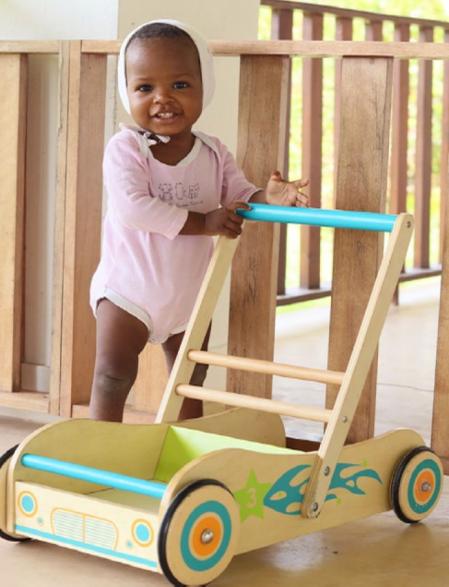
Our premature baby, little Laura*, who almost didn't survive in the first weeks after her birth and was often in the hospital, is now out of the woods. Today, you wouldn't know that
she went through that difficult time. She is already walking and is truly spoiled by our other children.
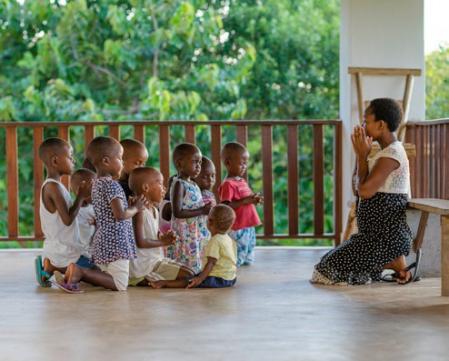
One of our visitors from Austria expressed his astonishment in November that he could already communicate with the older children in English. And one of our girls already translates for Beate when she speaks German with the children. With enthusiasm, she explains to the other children what Beate has said. We try everything to ensure the children grow up multilingual. This gives them a significant advantage for their later lives.
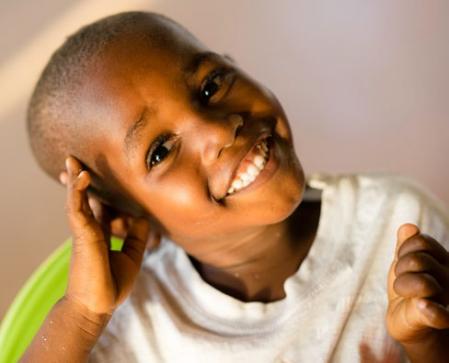
The older children attend our preschool for two hours in the morning. They do crafts and paint, learn to read, write, and count. They also practice their English every day. They enjoy it very much. However, we also make sure not to overburden them.
Since the middle of the year, we have been busy with the approval for our Primary School. Unfortunately, the approval process is proving to be very difficult. New documents are repeatedly requested by various authorities. Although we are already familiar with this type of bureaucracy, it costs us a great deal of perseverance and patience.
Further Measures
Now a few words about the planned construction measures. To simplify the school approval process, the responsible authority, the "Ministry of Education," requests us to start building additional classrooms. Therefore, we will have to wait with the planned construction of the cafeteria for now. Before the rainy season, more paths on the premises will be paved and provided with lighting for nighttime safety. Due to the COVID-19 crisis, it will be necessary to improve our self-sufficiency in food. An irrigation system with additional water supply and more fruit plantations (mango, coconut, and papaya) must be established on our farm.
Special Challenges
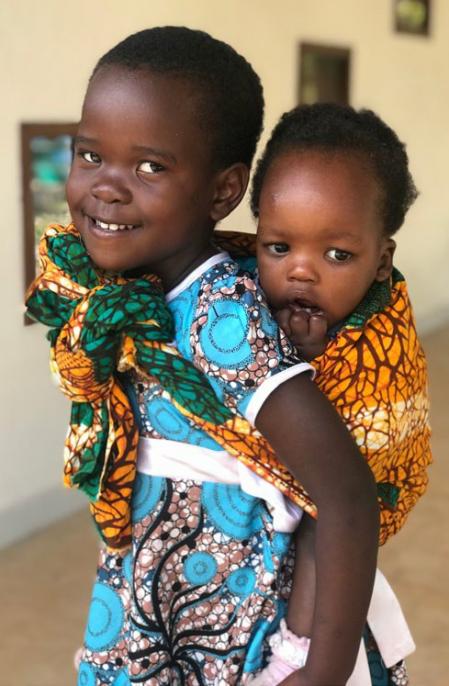
We are not sure what impact the COVID-19 crisis will have on our further development. Precisely for this reason, we would like to extend our heartfelt thanks to everyone who supports Dunia ya Heri – whether individuals, organizations
or companies. You have become a great blessing to the children.
THANK YOU!
We wish you a Merry Christmas and a blessed 2021
With warm regards and blessings
Yours

Thomas Küsel
Vice Chair
Dunia ya Heri
Yours

Judith Klier
Chair
Dunia ya Heri
* the name has been changed.
Donations
To help as many children as possible, we rely on donations. Thank you for your help.